歌舞伎D-13

THEATRES

The theatres where kabuki lives.

Kabuki shows a different face at every theatre — from Tokyo's grand stages to Edo-period playhouses preserved in towns across Japan. Check each official site for current programmes.

A journey of playhouses, north to south.

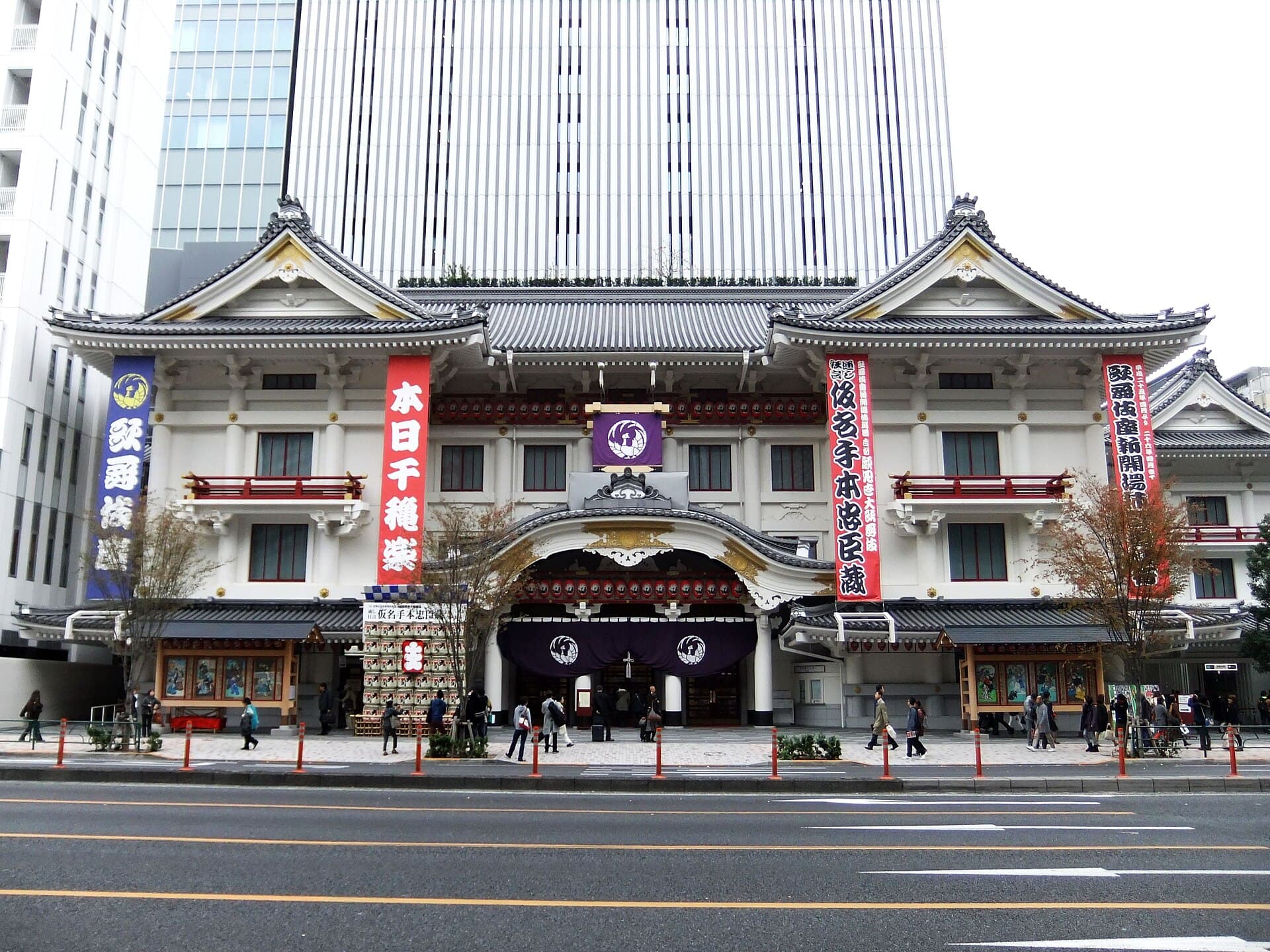
Front facade of the Kabukiza Theatre (fifth building, opened 2013)
写真: Tak1701d(パブリックドメイン, Wikimedia Commons)
01Higashi-Ginza, Tokyo

Kabukiza Theatre

Often called the home of kabuki, the Kabukiza first opened in 1889. The current building — the fifth on the site, opened in 2013 — pairs the traditional karahafu facade with a modern tower. It is one of the very few large theatres in the world devoted to kabuki almost all year round.

Programs and casts change monthly (the 'Grand Kabuki' of each month), and single-act tickets make it an easy first step for newcomers.

In November–December 2022 the Kabukiza hosted the name-succession (shumei) performances of Danjūrō XIII and the stage debut of Shinnosuke VIII. In July 2026, Danjūrō, Botan and Shinnosuke appeared together there in the July Grand Kabuki.
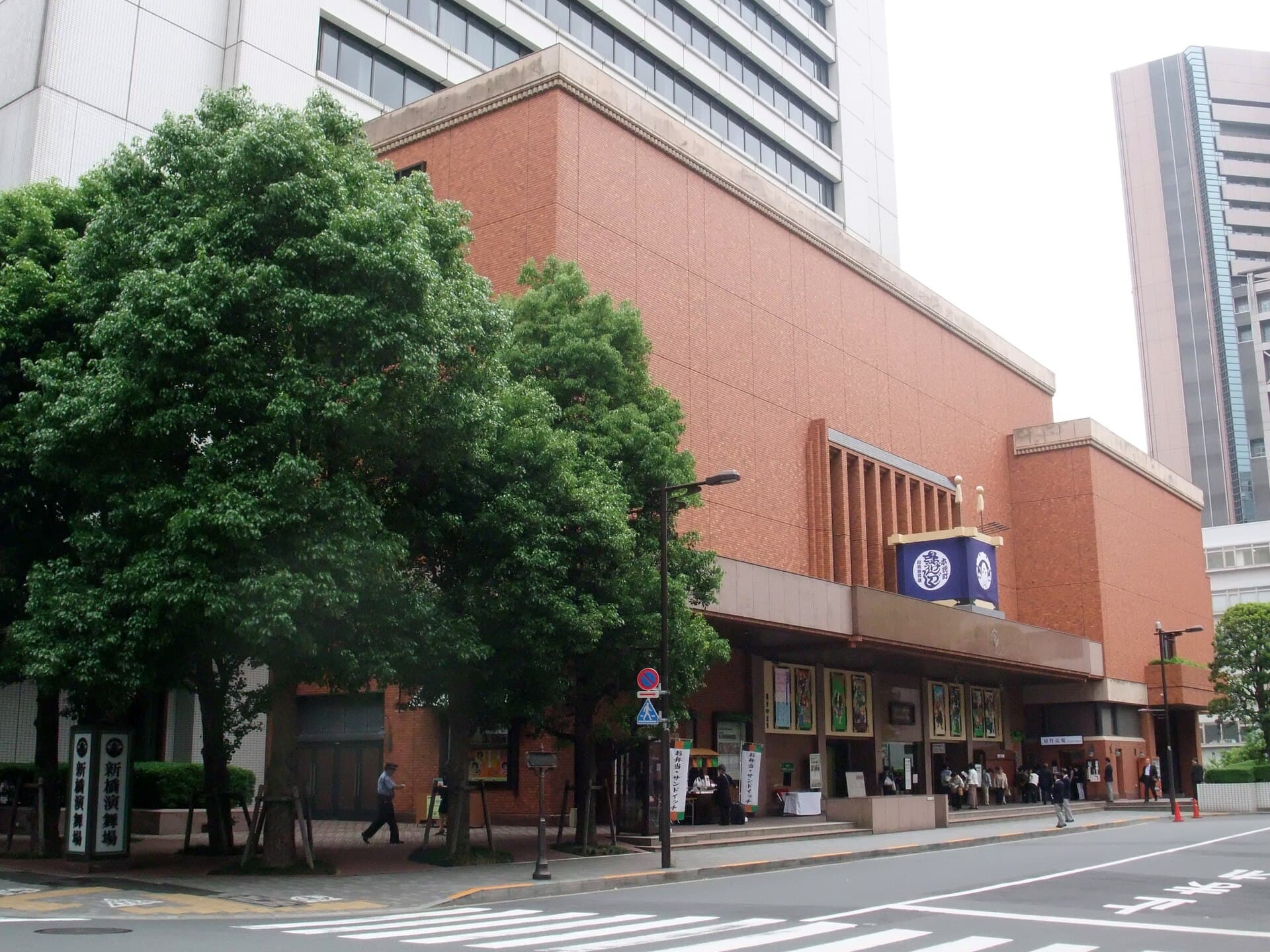
Exterior of the Shinbashi Enbujo Theatre
写真: Tak1701d(パブリックドメイン, Wikimedia Commons)
02Higashi-Ginza, Tokyo

Shinbashi Enbujo Theatre

The Shinbashi Enbujo is said to have opened in 1925 as the stage for the Azuma Odori dance performances of the Shinbashi geisha. Rebuilt since, it now presents everything from kabuki and shinpa drama to Super Kabuki, and stands with the Kabukiza as a theatre hub of Higashi-Ginza.

As a Shochiku theatre it regularly stages kabuki, and it is also known as the home stage of Super Kabuki, which blends kabuki with modern stagecraft.

During his years as Ebizō XI, the present Danjūrō long headlined the New Year kabuki runs here ('Hatsuharu Ebizō Kabuki'), sharing the stage with his children Ichikawa Botan and Horikoshi Kangen (now Shinnosuke VIII).

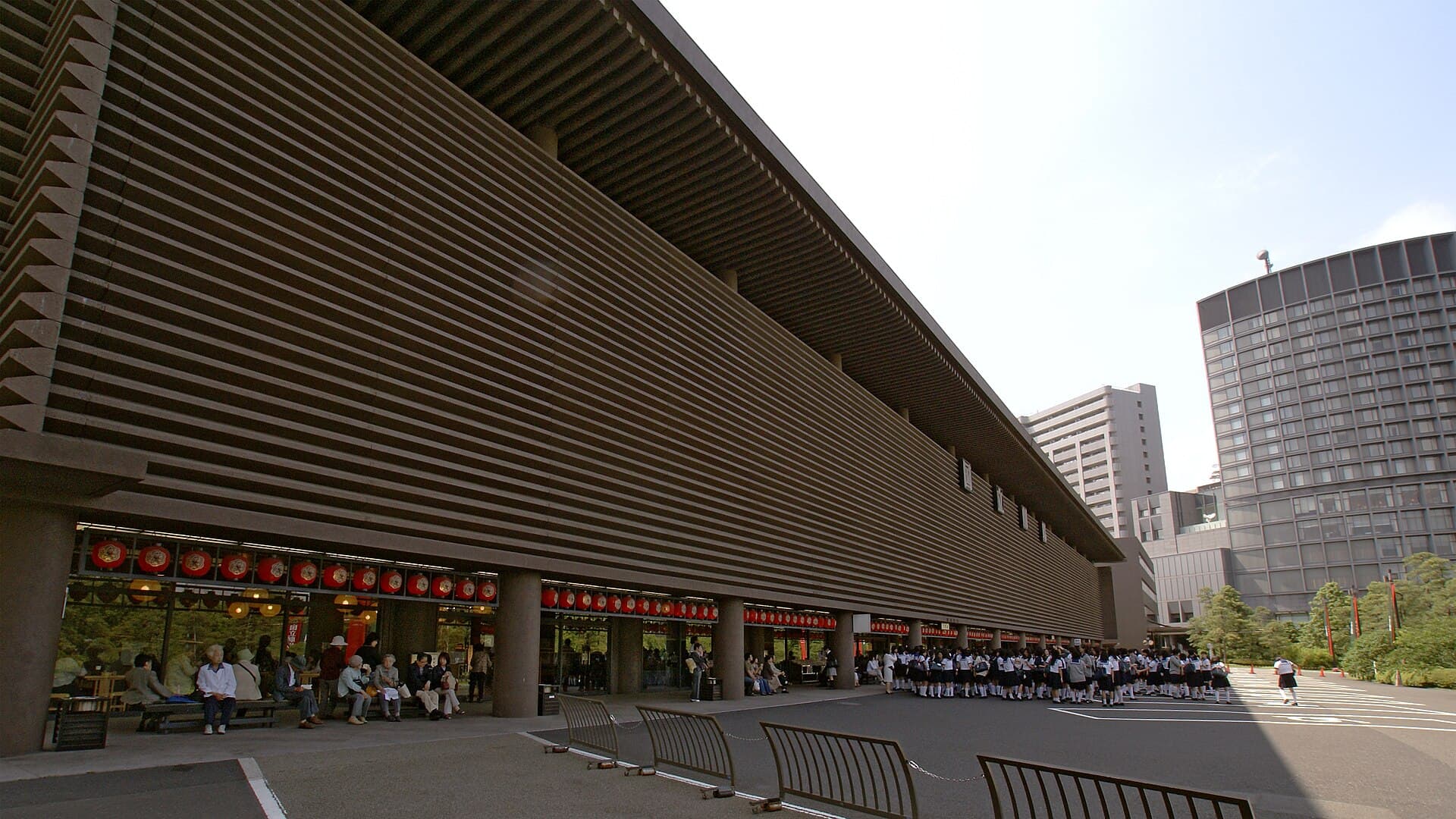
The National Theatre of Japan before its 2023 closure for rebuilding
写真: 663highland(CC BY 2.5, Wikimedia Commons)
03Hayabusacho (Hanzomon), Tokyo

National Theatre of Japan

Opened in 1966, the National Theatre of Japan preserves and promotes the traditional performing arts, in a building famous for its azekura-style facade. It closed in October 2023 for reconstruction; preparations for rebuilding are under way, while its productions continue at other venues.

It is known for reviving full-length toshi kyōgen productions and for beginner-friendly 'Discover Kabuki' programs with commentary, as well as for training future kabuki actors. Under the rebuilding plan announced in December 2025, handover of the new building is envisaged around March 2036.

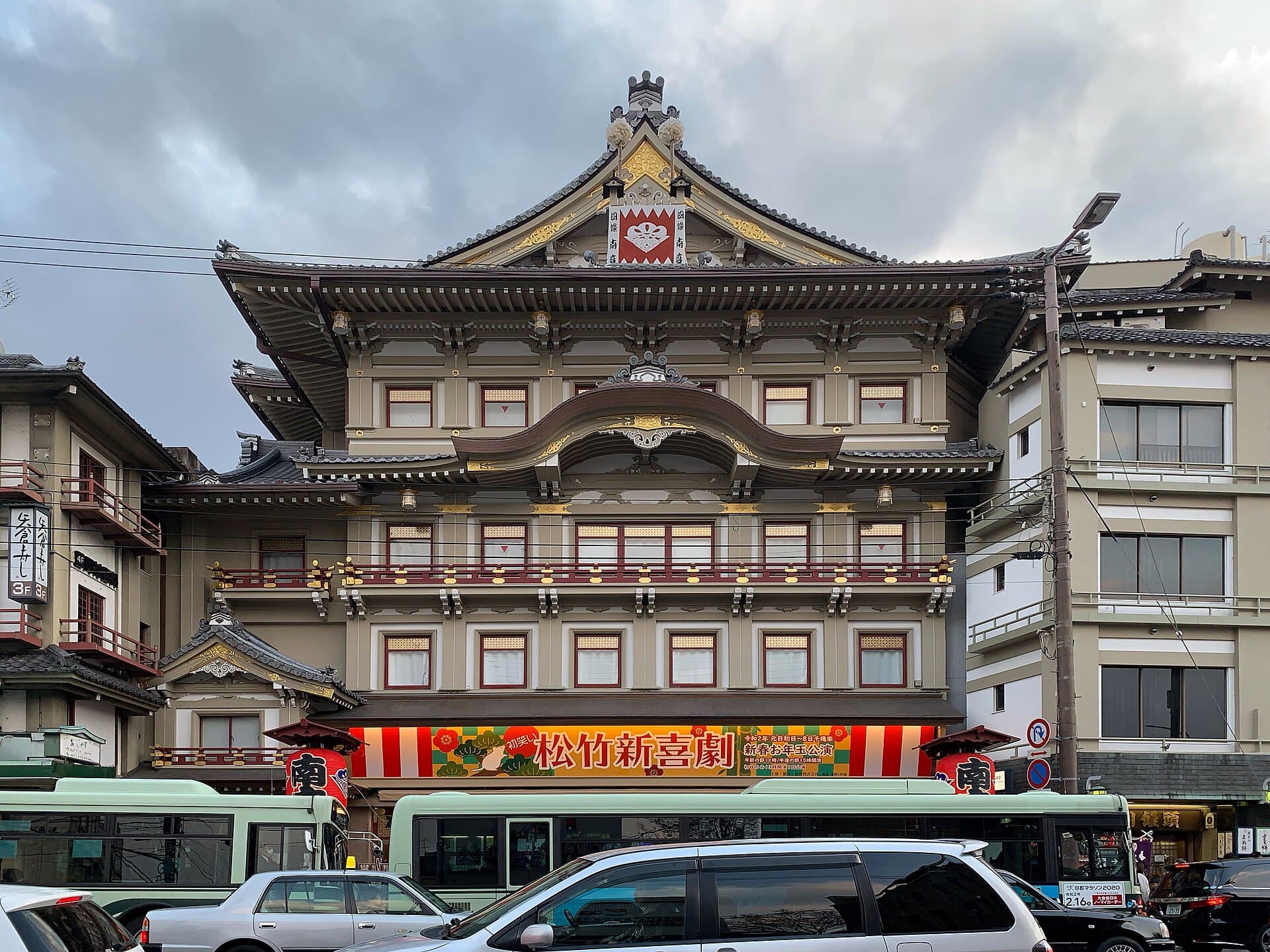
Facade of the Minamiza Theatre, built in 1929
写真: Chainwit.(CC BY-SA 4.0, Wikimedia Commons)
04Shijo-Ohashi, Kyoto

Minamiza Theatre

The Minamiza traces its lineage to the playhouses of Kyoto's Shijo-gawara licensed in the Genna era (1615–24), making it one of Japan's oldest theatres. The present Momoyama-style building, completed in 1929, is a nationally registered tangible cultural property, standing near the spot where Izumo no Okuni is said to have performed the first kabuki dances.

Its annual kaomise (all-star 'face-showing') run from late November through December is a Kyoto institution, heralded by the maneki-age — wooden name boards of the cast raised on the facade.

The December 2023 kaomise here celebrated the name succession of Danjūrō XIII. An 'Ichikawa Danjūrō Special Performance' (featuring Kanjinchō) is scheduled for 3–25 October 2026.

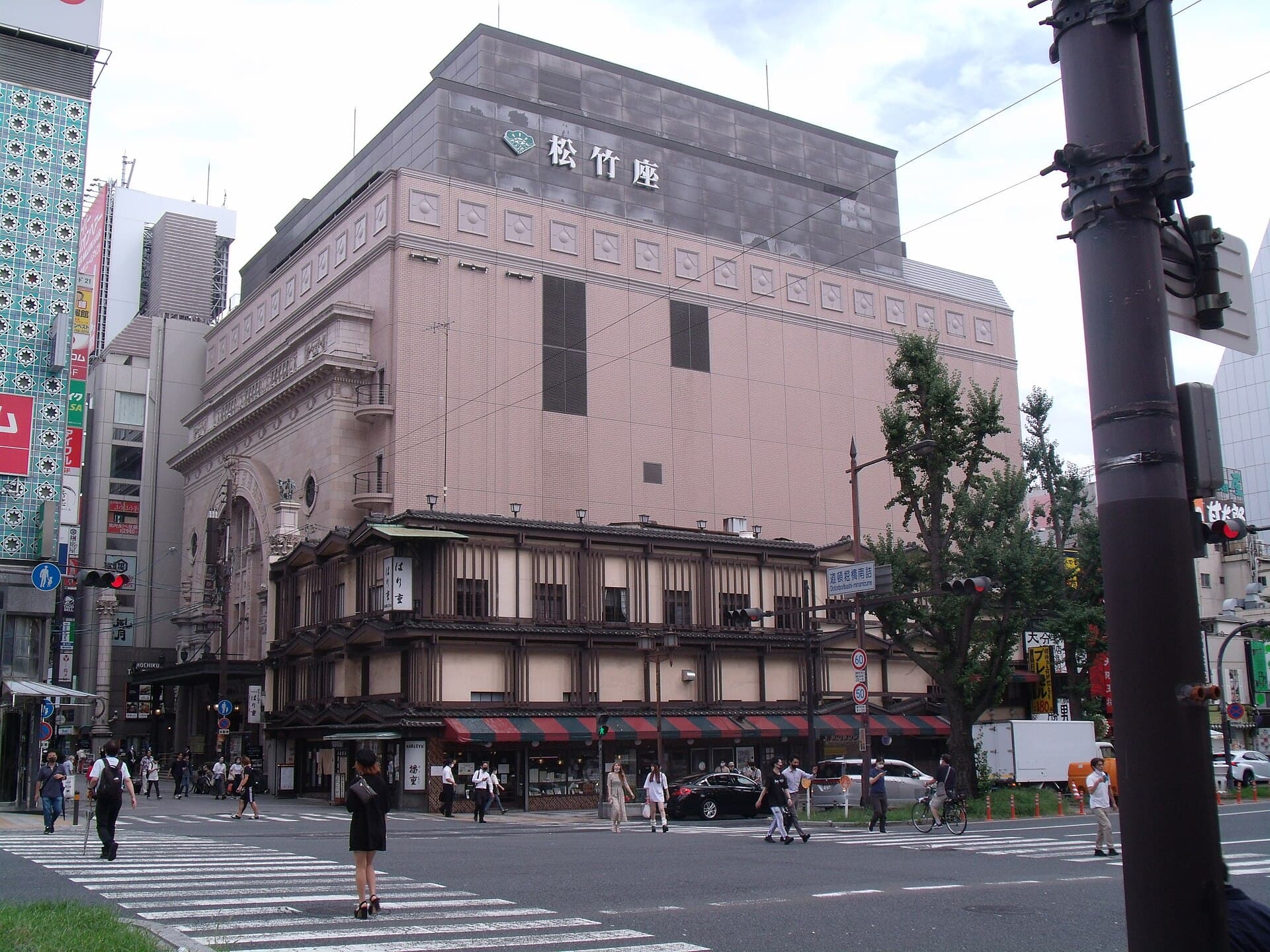
The Osaka Shochikuza Theatre on Dotonbori
写真: Mr.ちゅらさん(CC BY-SA 4.0, Wikimedia Commons)
05Dotonbori, Osaka

Osaka Shochikuza Theatre

Opened in 1923 and said to be the Kansai region's first full-scale Western-style theatre, the Shochikuza is known for the grand neo-Renaissance arch that fronts Dotonbori. Its interior was rebuilt in 1997, relaunching it as a house for kabuki and other stage arts.

Long a stronghold of Kamigata (Osaka-style) kabuki famous for its July Grand Kabuki, the theatre closed after the farewell 'Onagori' May Grand Kabuki in May 2026 owing to the building's aging facilities. Shochiku has announced plans for a new cultural venue in Dotonbori.

In October 2024 the theatre hosted the name-succession performances of Danjūrō XIII.

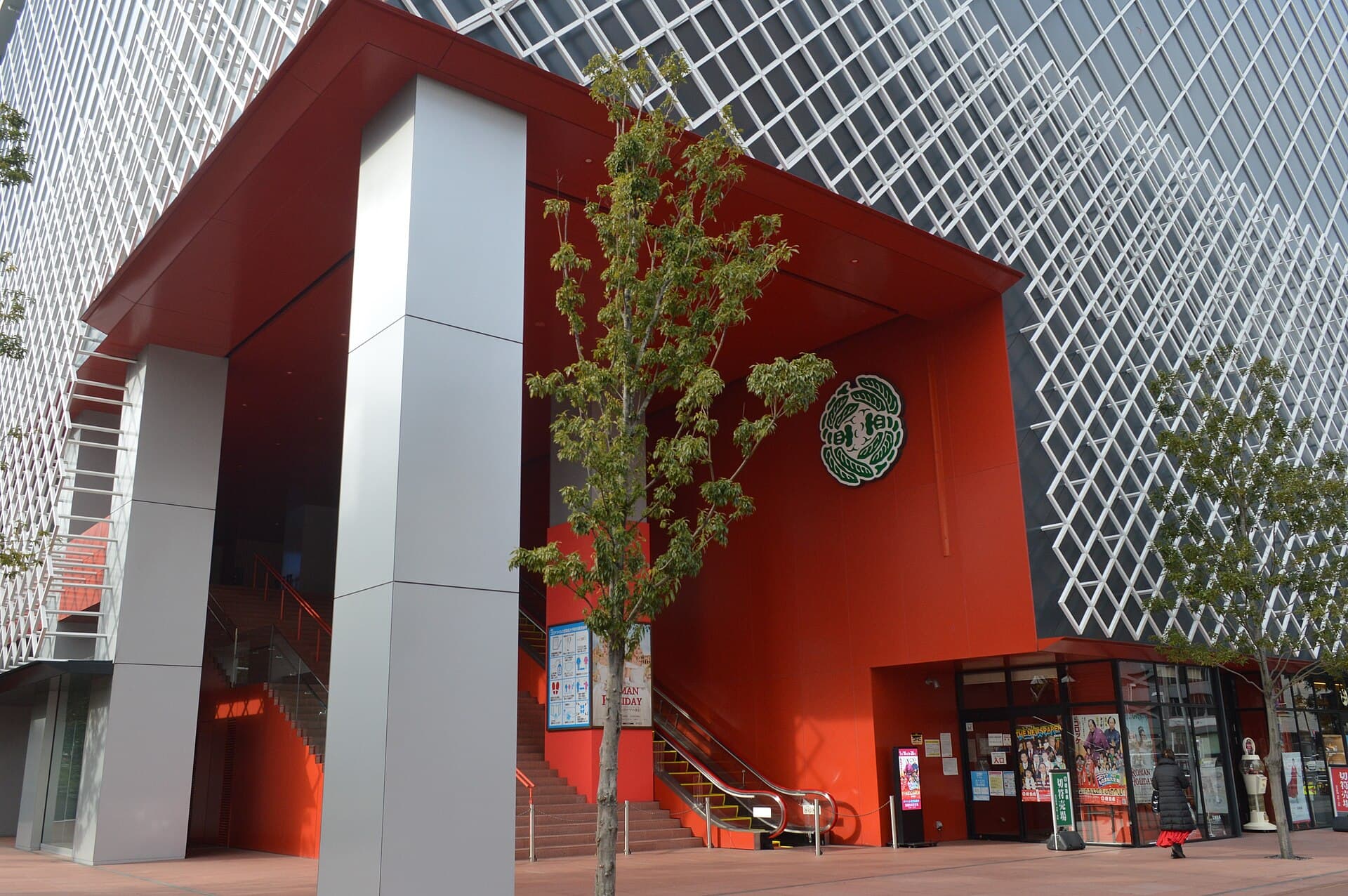
Entrance of the current Misonoza Theatre, opened in 2018
写真: Asturio Cantabrio(CC BY-SA 4.0, Wikimedia Commons)
06Fushimi, Nagoya

Misonoza Theatre

Founded in 1897, the Misonoza is Nagoya's flagship theatre. Rebuilt within a high-rise complex and reopened in 2018 with a striking vermilion design, it presents kabuki alongside a broad range of popular theatre.

Its annual kaomise each October is a cherished autumn tradition in Nagoya.

In February 2024 the theatre hosted the name-succession performances of Danjūrō XIII.

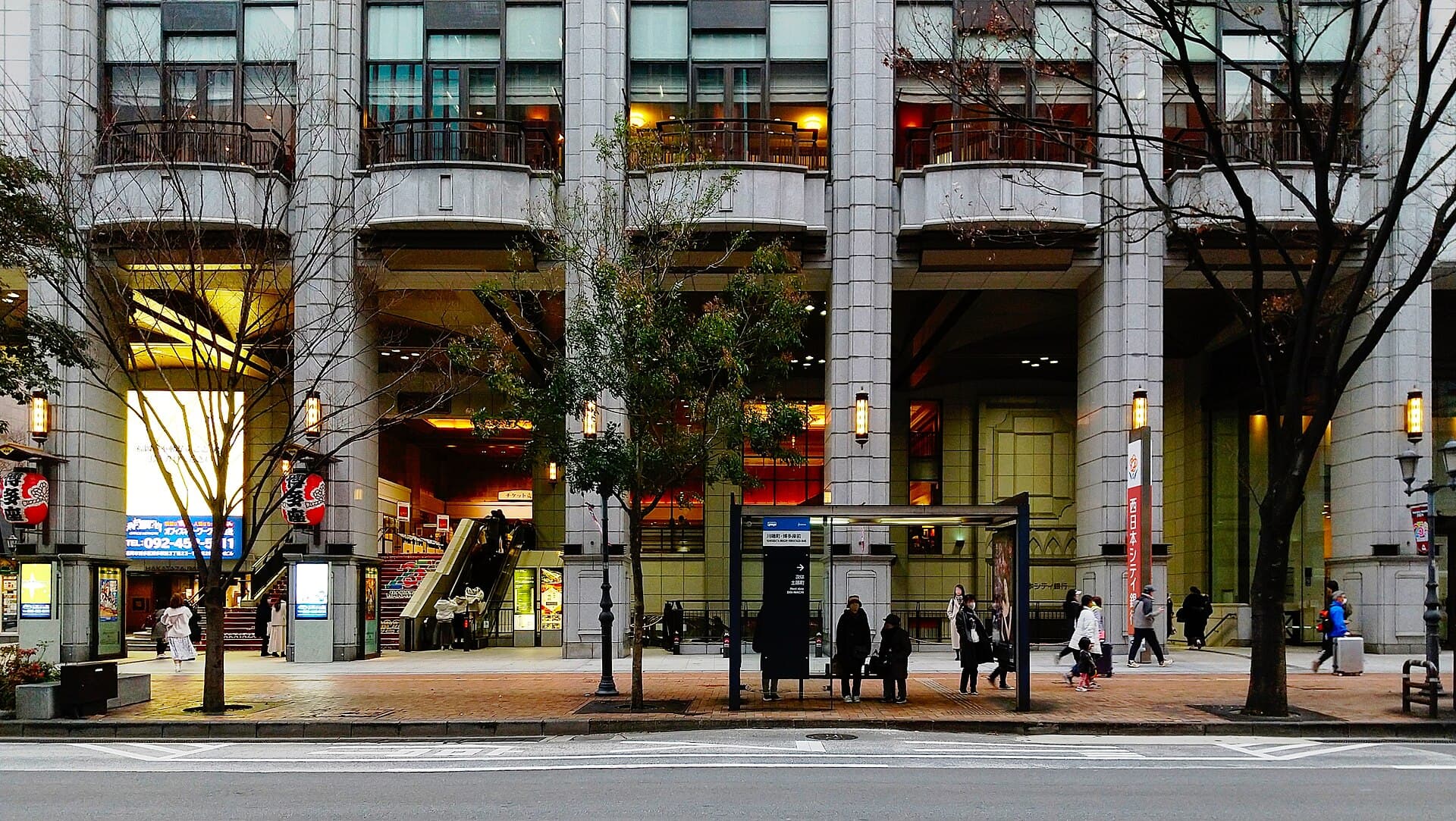
The Hakataza Theatre facade along Meiji-dori
写真: Hirho(CC BY-SA 4.0, Wikimedia Commons)
07Hakata, Fukuoka

Hakataza Theatre

Opened in 1999, the Hakataza is one of the largest dedicated theatres in Kyushu. With programs changing monthly — from kabuki to musicals — it is the heart of theatre-going culture in the region.

Each June brings the Hakataza Grand Kabuki, famously opened by the funanorikomi — the cast's ceremonial boat procession along Hakata's river.

In September 2023 the theatre hosted the name-succession performances of Danjūrō XIII.

Facade of the former Konpira Grand Theatre (Kanamaruza)
写真: 663highland(CC BY 2.5, Wikimedia Commons)
08Kotohira, Kagawa

Former Konpira Grand Theatre (Kanamaruza)

Built in 1835 and regarded as Japan's oldest surviving playhouse, the Kanamaruza is an Important Cultural Property. Its revolving stage turned by hand, the naraku space beneath the stage and the hanamichi walkway preserve the workings of an Edo-period theatre — and the building can be toured on non-performance days.

Since 1985 the spring 'Shikoku Konpira Kabuki Oshibai' has drawn kabuki fans from across Japan — a herald of spring in Shikoku. The 39th edition ran 10–26 April 2026.

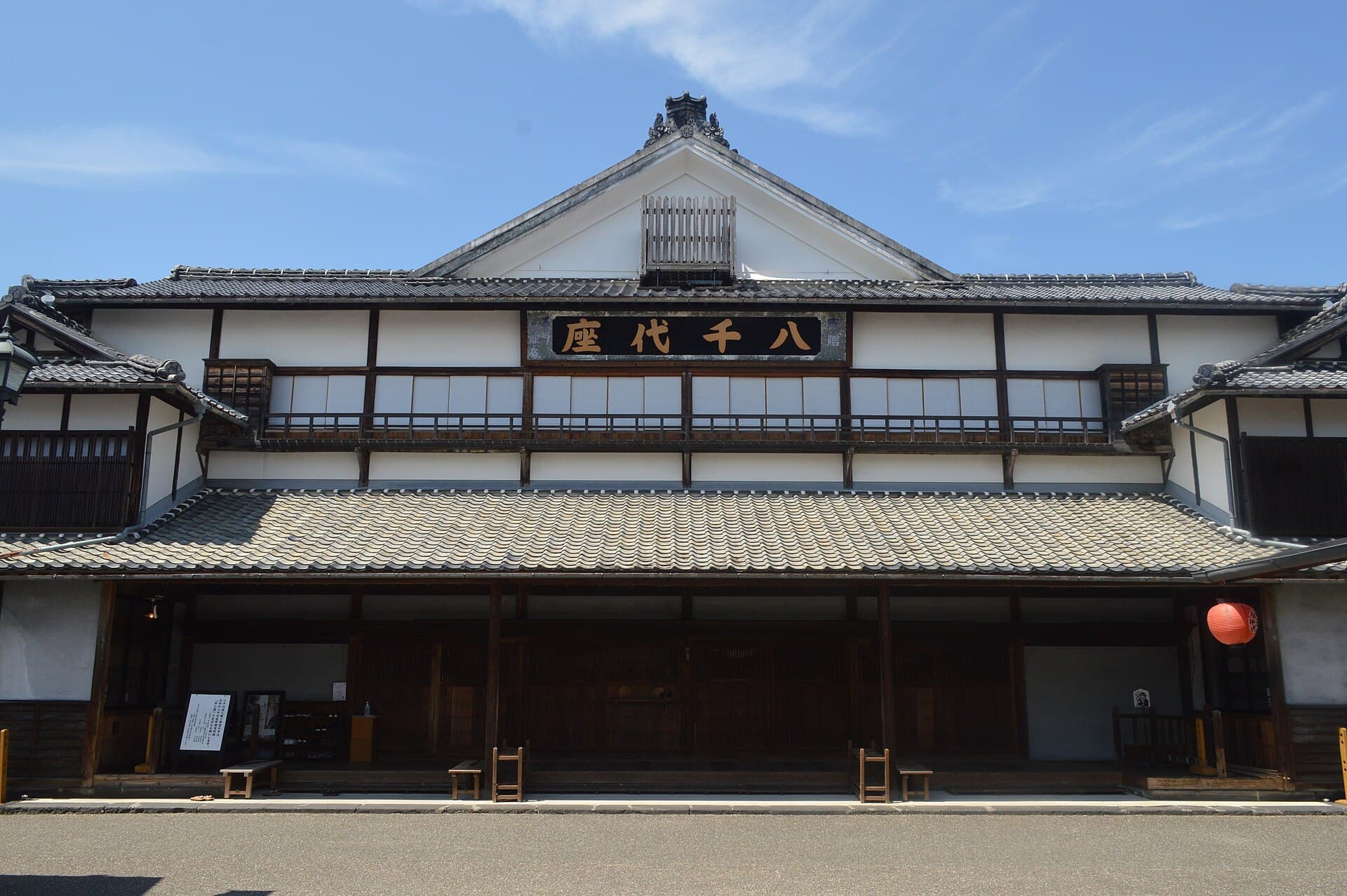
Facade of the Yachiyoza Theatre, built in 1910
写真: Asturio Cantabrio(CC BY-SA 4.0, Wikimedia Commons)
09Yamaga, Kumamoto

Yachiyoza Theatre

The Yachiyoza is a playhouse said to have been built in 1910 by the merchants of Yamaga, who raised the funds by selling shares; it is now an Important Cultural Property. Restored in the great Heisei repairs (1996–2001), it remains a working theatre, famed for its revolving stage on German-made rails and a ceiling filled with colourful period advertisements.

Its revival as a live playhouse is credited to Bando Tamasaburō's performances beginning in 1990, and kabuki and dance performances have continued there since.

The present Danjūrō, then Ebizō XI, gave special performances here in 2021 and 2022; the March 2021 run doubled as a name-succession celebration for Ichikawa Botan, with father and children sharing the stage.

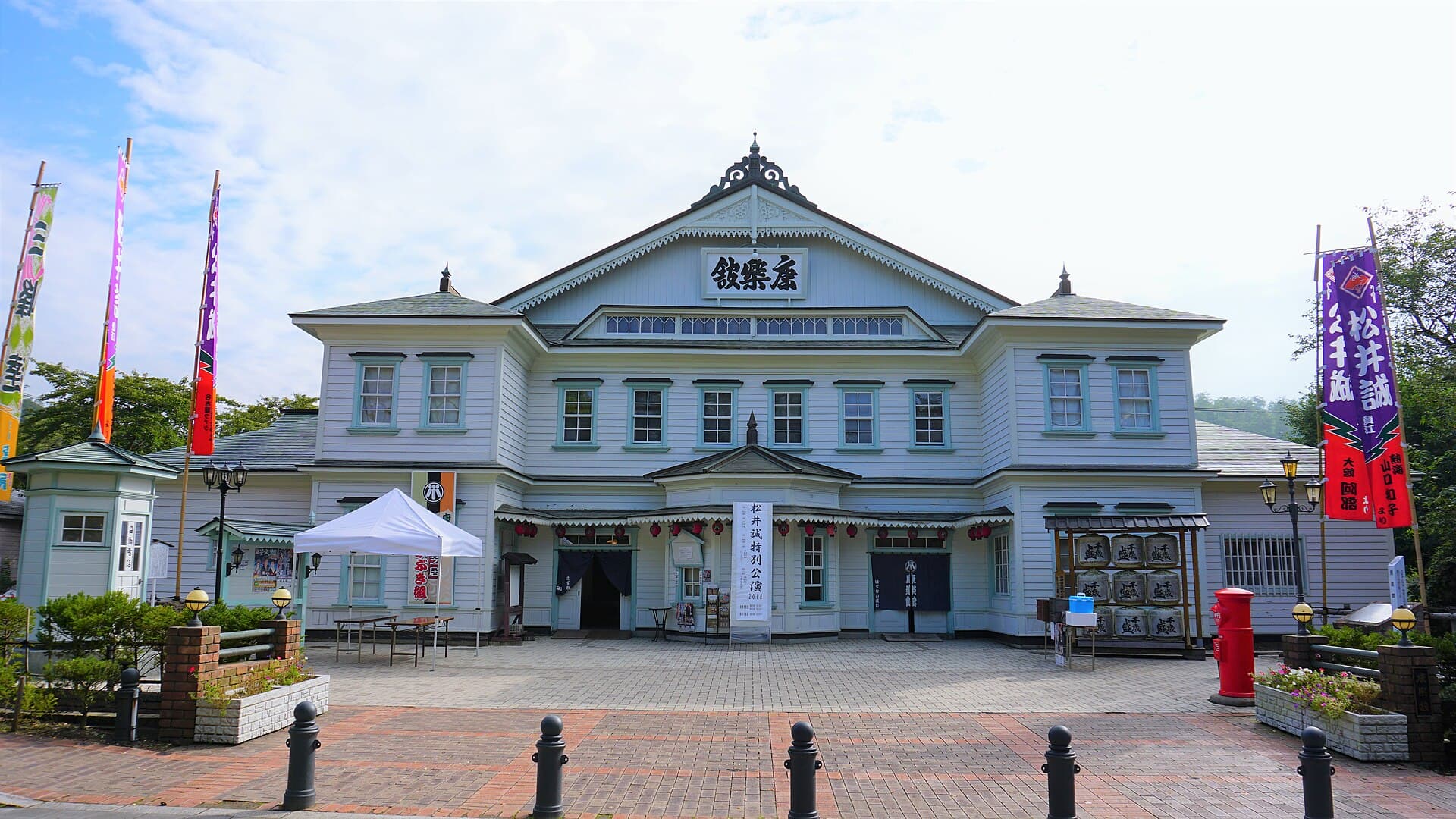
Facade of the Korakukan Theatre, built in 1910
写真: 掬茶(CC BY-SA 4.0, Wikimedia Commons)
10Kosaka, Akita

Korakukan Theatre

The Korakukan, said to have been built in 1910 as a welfare facility of the Kosaka Mine, is a wooden playhouse blending Japanese and Western styles and an Important Cultural Property. Behind its lacy Western facade lies a Japanese auditorium with tatami boxes and a hanamichi, and from April to November plays are staged almost daily.

Its opening performance is said to have been given by a kabuki troupe from Tokyo, and alongside its resident company it has hosted occasional special kabuki performances — a rare place to watch theatre in a Meiji-era playhouse.

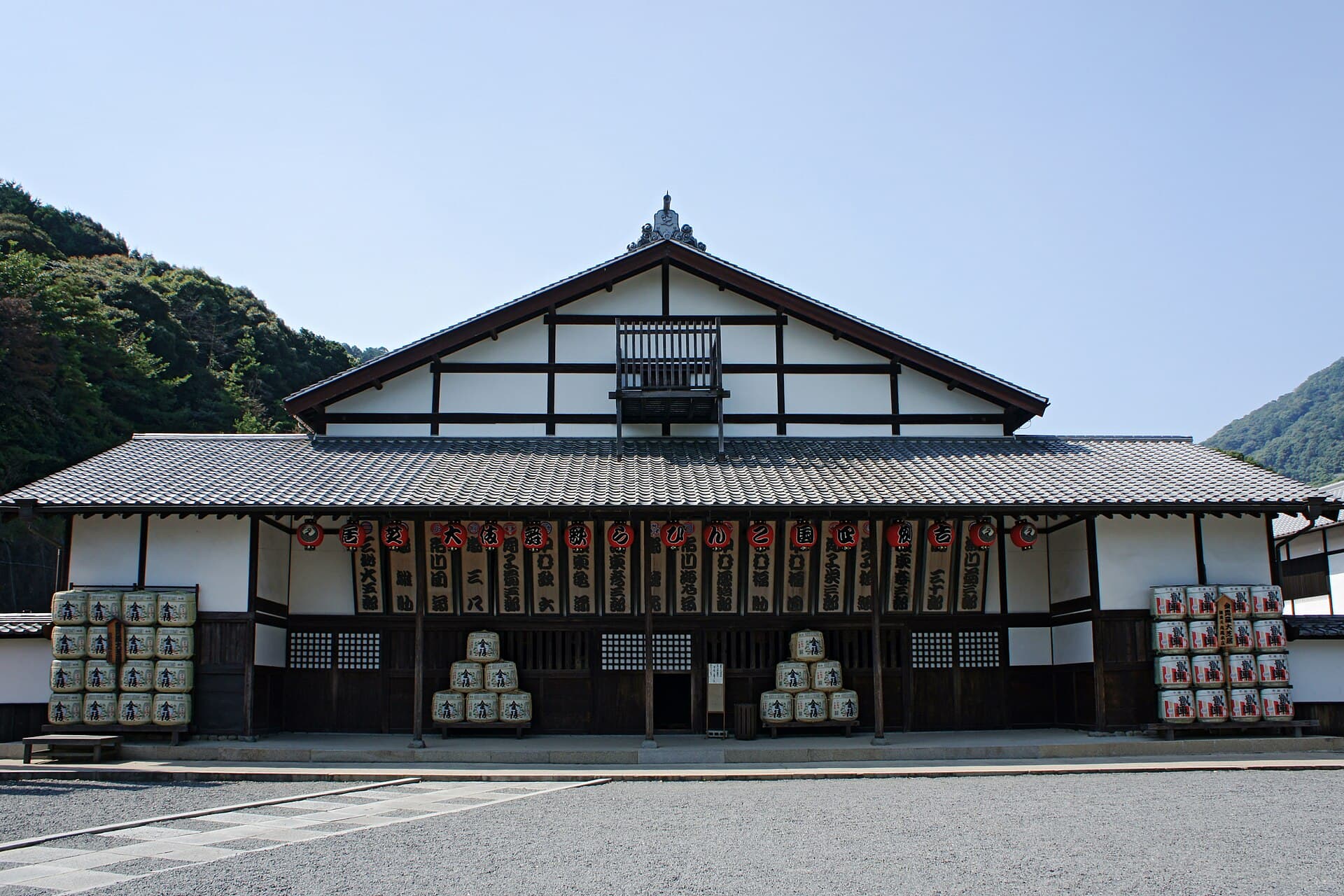
Exterior of the Izushi Eirakukan Theatre, opened in 1901
写真: 663highland(CC BY-SA 4.0, Wikimedia Commons)
11Izushi, Toyooka, Hyogo

Izushi Eirakukan Theatre

Said to have opened in 1901 in the castle town of Izushi, the Eirakukan is held to be the oldest playhouse in the Kinki region. It went dark in 1964, but restoration returned it to life in 2008; now a Hyogo Prefecture designated cultural property, its revolving stage and understage can also be toured.

Its 2008 reopening was celebrated with kabuki led by Kataoka Ainosuke, and the annual 'Eirakukan Kabuki' has since become an autumn tradition in the Tajima region.

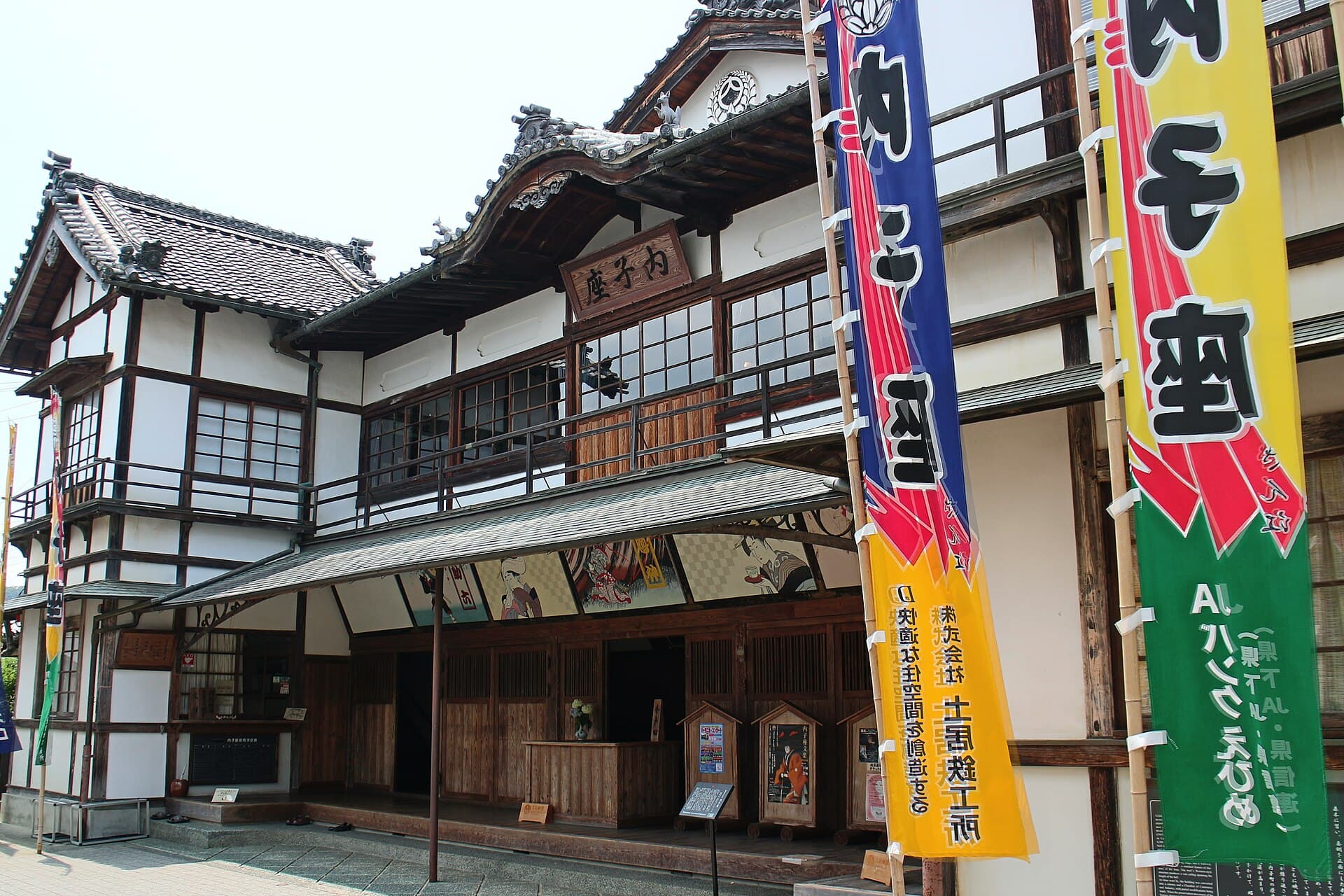
Front of the Uchikoza Theatre, built in 1916
写真: Suicasmo(CC BY-SA 4.0, Wikimedia Commons)
12Uchiko, Ehime

Uchikoza Theatre

The Uchikoza is said to have been built in 1916 by local citizens to mark the enthronement of Emperor Taisho, and is an Important Cultural Property whose two-storey wooden auditorium and understage survive from that era. It has been closed for preservation works since September 2024, with reopening planned for spring 2029; during the closure its backstage dressing rooms are open to visitors.

A town theatre long used for kabuki and bunraku — the annual 'Uchikoza Bunraku' was a fixture before the closure — it is intended to return as a working playhouse once the repairs are complete.

FROM THE OFFICIAL CHANNEL

KABUKU. / Ichikawa Danjūrō.

Inside the theatres, on film

【楽屋紹介】市川團十郎が語る舞台裏|歌舞伎座の鏡台へのこだわり。

Jun 8, 2025

The part of the Kabukiza no audience sees — what role the dressing room plays within the building.

Theatre photographs are licence-verified images from Wikimedia Commons (CC BY / CC BY-SA / public domain), credited in each caption, or cleared materials.