歌舞伎D-13

KABUKI JUHACHIBAN — THE EIGHTEEN

Kabuki Jūhachiban

The Kabuki Jūhachiban — the "Eighteen Best Plays" — is the collection of eighteen signature plays handed down in the Ichikawa Danjūrō family. Danjūrō VII is said to have selected them in the Tenpō era (1830s–40s) as the family's hereditary art. Centred on the bold aragoto style, the set includes Kanjinchō, Shibaraku, and Sukeroku, still performed today.

KEY FACTS

  • A set of eighteen plays regarded as the hereditary art of the Ichikawa Danjūrō family.
  • Said to have been selected by Ichikawa Danjūrō VII in the Tenpō era (1830s–40s).
  • Most are aragoto pieces associated with Danjūrō I and Danjūrō II.
  • Kanjinchō, Shibaraku, and Sukeroku remain frequently staged today.
  • Believed to be the origin of the Japanese word ohako ("one's speciality"), written with the characters for eighteen.
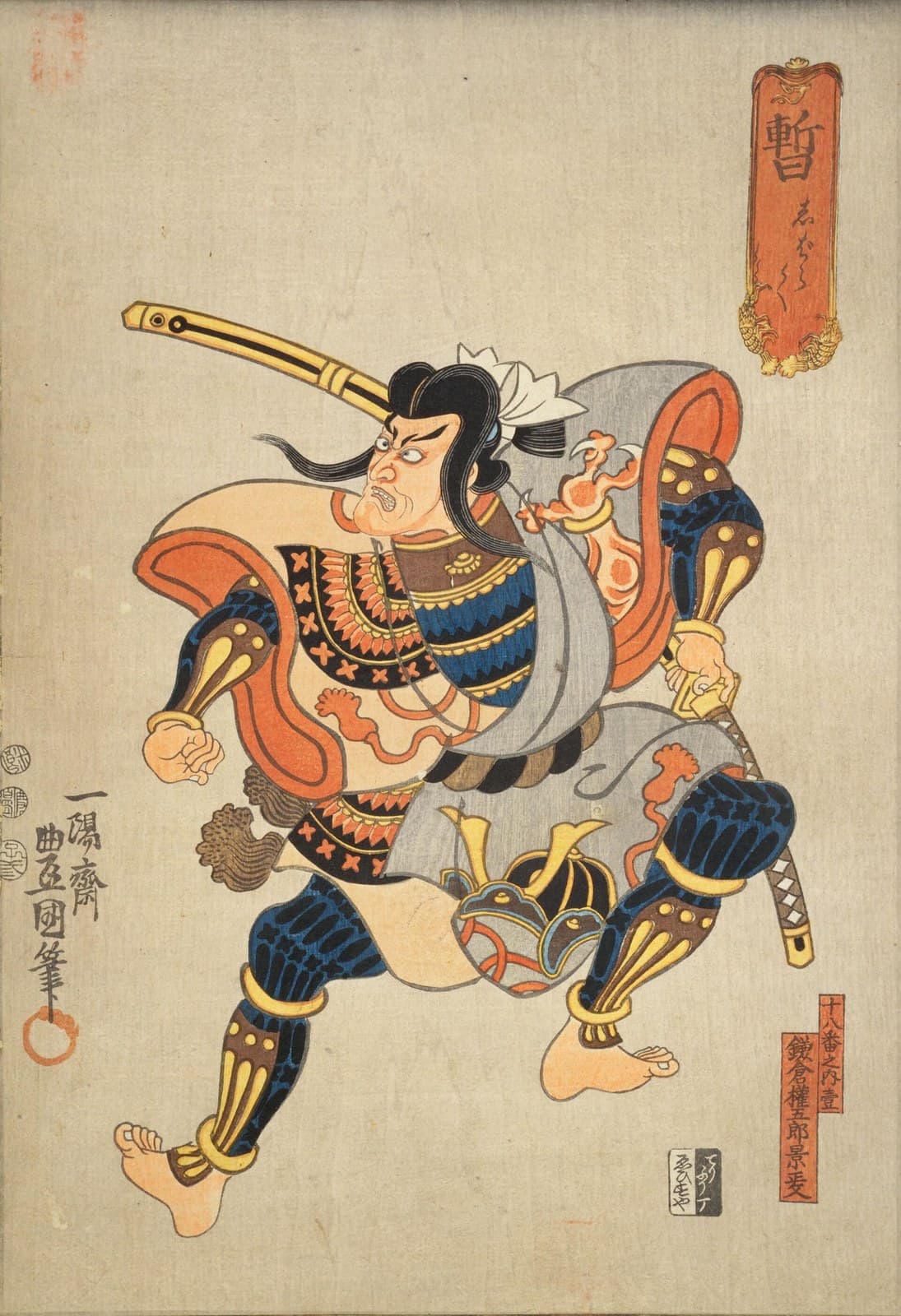
A Meiji-era woodblock print of the hero of 'Shibaraku'
From a Meiji-era woodblock print
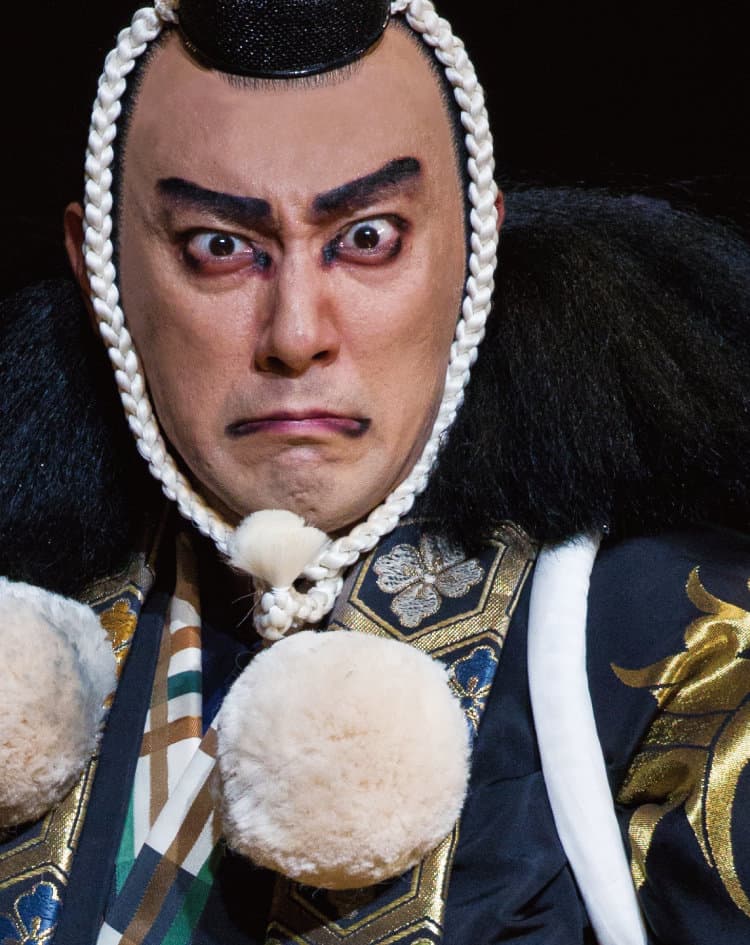
Ichikawa Danjūrō in an aragoto role with kumadori make-up
01THE EIGHTEEN PLAYS

All Eighteen

Some of the eighteen are staged often today; others have long been absent from the stage. Every play links to a beginner's guide — just follow 'Read the guide'.

FROM THE OFFICIAL CHANNEL

KABUKU. / Ichikawa Danjūrō.

The Eighteen, in his own words

02ARAGOTO

The Aragoto Connection

Most of the eighteen belong to aragoto, the heroic "wild style" said to have been created by Danjūrō I. With its bold kumadori makeup, oversized costumes, and dramatic mie poses, aragoto conjures superhuman power on stage — the very emblem of Edo kabuki, and the art the Ichikawa family has refined for generations.

To know the Jūhachiban is to know aragoto — and to know aragoto is to glimpse what the name Ichikawa Danjūrō has carried across four hundred years.

Read the glossary: aragoto
03ON STAGE TODAY

On Stage Today

Of the eighteen, Kanjinchō, Shibaraku, and Sukeroku are performed regularly and rank among the best-loved plays in all kabuki. Narukami and Kenuki also appear on stage with some frequency.

Oshimodoshi — "pushing back" a rampaging spirit down the hanamichi — is a pure piece of stage form that appears both on its own and as a device within other plays. Uirō-uri, famed for its virtuoso tongue-twister speech, is often chosen in the Ichikawa family for stage debuts and name-succession milestones; the speech itself lives on as a training text for actors and broadcasters across Japan.

Many of the other titles, however, have long been absent from the stage. Reviving them is itself part of handing the family's art to the future.

NOW SHOWING — KANJINCHO

See Kanjinchō Live

A special month at Kyoto's Minamiza theatre bringing Danjūrō and his son Shinnosuke together. The matinee features "Kanjinchō", one of kabuki's most celebrated plays; the evening bill centres on the bold aragoto piece "Dairiki Tenmusō". An ideal first visit to the historic Minamiza.

Dates
Oct 3, 2026 – Oct 25
Venue
Minamiza Theatre(Kyoto)

Related terms