senryō yakusha
千両役者
せんりょうやくしゃa "thousand-ryō actor"—a star of the very first rank
INSTANT ANSWER
A senryō yakusha is an actor whose popularity commanded a yearly salary of a thousand ryō—Ichikawa Danjūrō II is counted among the first to earn the title.
A senryō yakusha was an Edo-period kabuki actor whose popularity and skill commanded a yearly salary approaching a thousand ryō. Actors contracted exclusively with a theatre for the year running from the eleventh month, and one whose fee reached that extraordinary sum earned the name.
The birth of the senryō yakusha is traditionally dated to 1721, when Ichikawa Danjūrō II received a salary of one thousand ryō; he and Yoshizawa Ayame I are counted as the first. Today the phrase has left the theatre to praise a standout performer in any field.
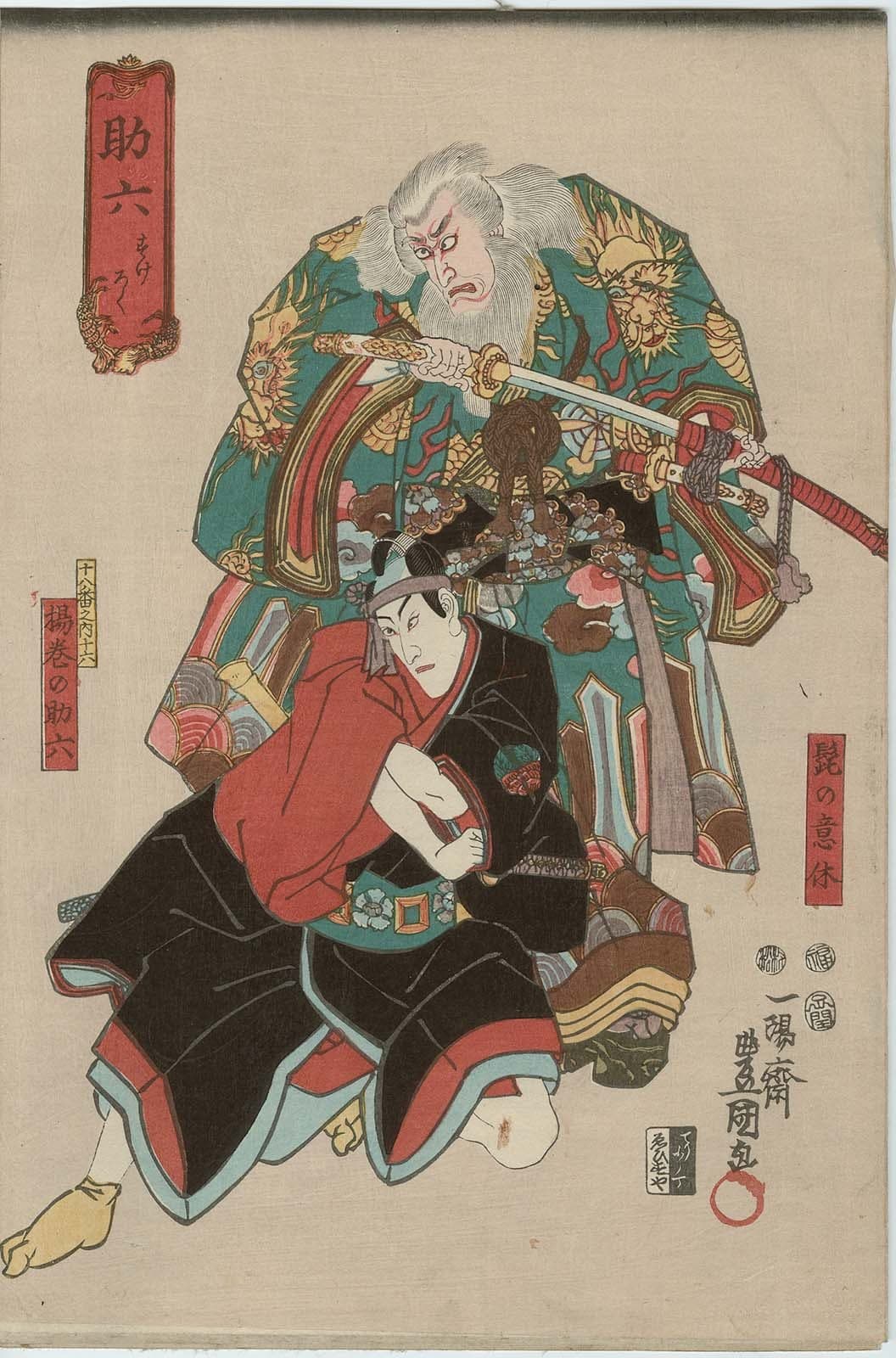
The art of the thousand-ryō actor still breathes on today's stage, for Danjūrō II, counted among the first senryō yakusha, is also said to have created the hero of Sukeroku in the Kabuki Jūhachiban. The dazzling hanamichi entrance, snake-eye umbrella in hand, conveys to this day the popularity for which Edo audiences begrudged no thousand ryō.
The very coinage of the word bears the name Ichikawa Danjūrō: it arose because Danjūrō II, master of aragoto, held Edo's affection in his single person. Senryō yakusha is a word where the history of the Ichikawa Sōke and the history of the Japanese language meet.
Read this next
These words meet on the same stage. Knowing one makes the next easier to see.
- 座頭zagashiraThe zagashira is the actor at the head of a troupe—supreme in both artistry and standing, who in the Edo period wielded authority over the stage and the company alike.Read
- 江戸三座Edo sanzaThe Edo sanza were the three officially licensed playhouses of Edo—the Nakamura-za, Ichimura-za, and Morita-za—the heart of Edo kabuki until the Meiji era.Read
- 顔見世kaomiseKaomise is the annual "face-showing" production that introduced a theatre's newly assembled troupe—once the most important event of the kabuki year.Read
- 名題nadaiNadai is the senior rank of kabuki actors, attained through a qualifying examination and a formal promotion; other actors are called nadai-shita.Read
Sources & Supervision
- Author
- KABUKI Universe Editorial Team
- Supervision
- Ichikawa Danjūrō
- Published
- Aug 16, 2026
- Updated
- Sep 9, 2026
Supervision means Ichikawa Danjūrō has reviewed this page's intent and key points. The text is the editorial team's writing, not Ichikawa Danjūrō's own statements. Editorial responsibility rests with the team, which corrects any error. Read the editorial policy