shamisen
三味線
しゃみせんthe three-stringed instrument at the heart of kabuki music
INSTANT ANSWER
The shamisen is the three-stringed, plectrum-struck instrument at the heart of kabuki music, built in thin-, middle-, and thick-necked types for different musical styles.
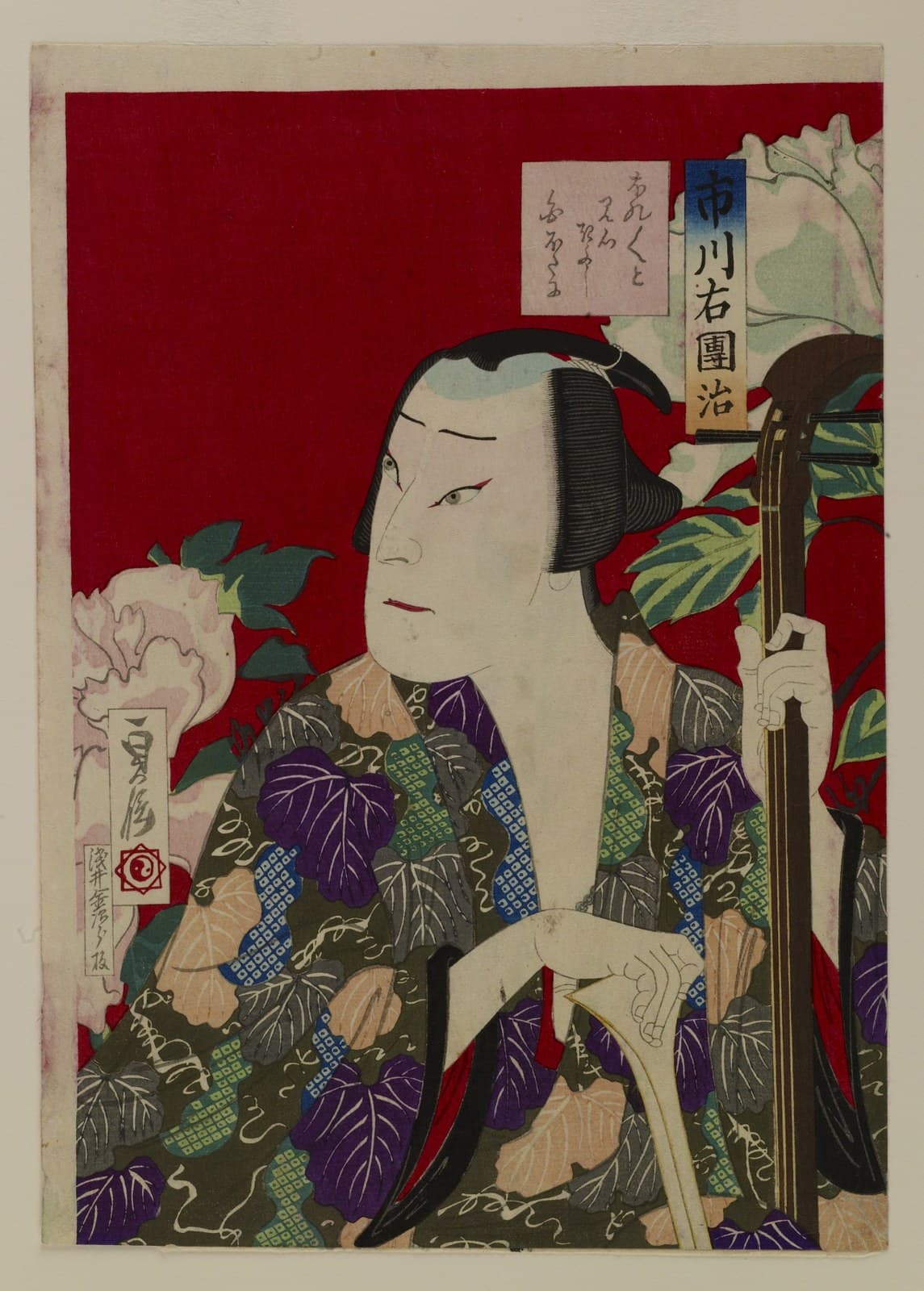
The shamisen is a three-stringed instrument struck with a large plectrum, and it stands at the center of kabuki music. It is classified by the thickness of its neck: the thin-necked type is used mainly for nagauta, the middle-necked for Tokiwazu and Kiyomoto, and the thick-necked for gidayū (takemoto).
Each type has its own voice—light and melodic in the thin-necked instrument, deep and weighty in the thick-necked one. Breathing with the actors' lines and movements, the shamisen announces entrances, colours emotion, and transforms the air of a scene; the kabuki stage moves with its sound.
The shamisen has even entered idiom. To 'play the shamisen' (shamisen o hiku) is to humor someone—matching their tune on the surface while dodging or disguising one's real intent—an expression said to be born of the instrument's role of following and matching the singer's line. Kuchi-jamisen, 'mouth shamisen,' likewise names an empty, tuneful chiming-in.
The shamisen belongs to kabuki as a whole rather than to any one house. Even the boldest aragoto poses of the Ichikawa Sōke's repertoire resolve into a finished picture only together with its music.
Plays Where You Can See It
Read this next
These words meet on the same stage. Knowing one makes the next easier to see.
- 長唄nagautaNagauta is the lyrical school of shamisen music that grew up with Edo kabuki, accompanying dance and coloring scenes throughout the play.Read
- 竹本takemotoTakemoto is gidayū narrative music as performed in kabuki: a chanter and thick-necked shamisen carry the story in plays adapted from the puppet theatre.Read
- ツケtsukeTsuke are the sharp beats of wooden clappers struck against a board at the side of the stage, accenting footsteps and landing exactly on the frozen mie poses.Read
Sources & Supervision
- Author
- KABUKI Universe Editorial Team
- Supervision
- Ichikawa Danjūrō
- Published
- Aug 15, 2026
- Updated
- Sep 9, 2026
Supervision means Ichikawa Danjūrō has reviewed this page's intent and key points. The text is the editorial team's writing, not Ichikawa Danjūrō's own statements. Editorial responsibility rests with the team, which corrects any error. Read the editorial policy