Q&A
Costume, Makeup & Wigs
How is stage makeup removed?
ANSWER
It is lifted off with oil — dissolving the white paint together with its pomade base — then wiped and washed. You do not start by scrubbing with soap and water.
The Short Version
- The kabuki white face is paste white layered over a thin base of bintsuke pomade.
- To remove it, a heavily oiled cleanser lifts the whole structure at once.
- What is lifted is wiped away before the face is washed; one does not start by scrubbing.
- Applied with oil, removed with oil: the method of removal is built into the makeup itself.
See it in a picture
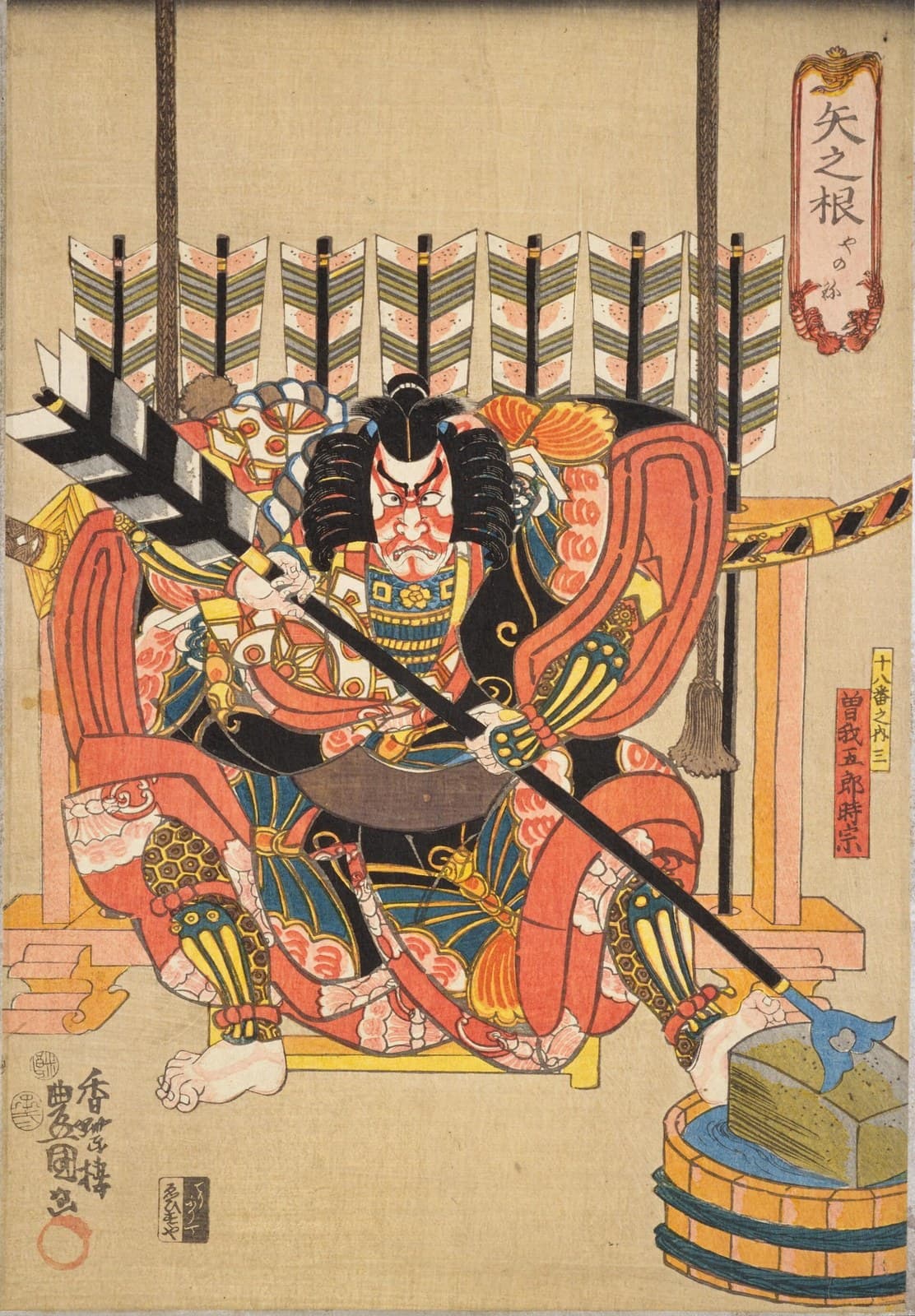
Beni-guma (red)
Justice, youth, overflowing strength
Ai-guma (indigo)
Villainy, vengeful spirits, cold power
Cha-guma (brown)
Demons and creatures beyond the human
To understand removal you first need to know the application. The kabuki white face is not laid straight onto skin. A thin base of bintsuke pomade goes on first, and paste white is layered over it. That two-layer structure is the point.
The principle of removal is: take it off with oil. A heavily oiled cleanser is worked into the face, lifting the white and its pomade base together. What has been lifted is carefully wiped away, and only then is the face washed. One does not begin by scrubbing with soap and water: neither the white nor the oil comes off with water, so scrubbing merely spreads it and burdens the skin. The kumadori pigments are oil-based too, and come away the same way.
Applied with oil, removed with oil: the method of removal is built into the makeup itself. There is a secondary benefit. Because the pomade base forms a film between skin and pigment, little of the pigment is left on the skin when it comes off. Over long years this was presumably shaped into a method that holds up under daily repetition. Note too that before removal a face is sometimes pressed to paper or cloth to take an impression of the kumadori. This is oshiguma, kept as a memento — and only oil-based pigments make such an impression possible.
Words Used Above
- Bintsuke abura
- A solid pomade used for hair and as a makeup base, forming the film beneath the white.
- Paste white
- The white cosmetic in paste form, layered over the oil base to build the white face.
- Oshiguma
- An impression of the kumadori pressed onto paper or cloth and kept as a memento.
Words in This Answer
- 隈取kumadoriKumadori is kabuki's distinctive makeup of bold colored lines that reveals a character's nature—red for heroic passion, blue for villainy or the supernatural.
- 楽屋gakuyaThe gakuya are the rooms behind the stage where performers prepare and rest—a word said to derive from the place where court musicians once played.
More in This Category
Sources & Method
This answer rests on widely shared, established knowledge of kabuki. Matters transmitted as custom are marked "it is said," and assertion is avoided.
- Author
- KABUKI Universe Editorial Team
- Supervision
- Ichikawa Danjūrō
- Published
- Aug 25, 2026
- Updated
- Sep 9, 2026
Supervision means Ichikawa Danjūrō has reviewed this page's intent and key points. The text is the editorial team's writing, not Ichikawa Danjūrō's own statements. Editorial responsibility rests with the team, which corrects any error. Read the editorial policy