Q&A
Costume, Makeup & Wigs
Doesn't stage makeup damage the skin?
ANSWER
The pomade base forms a protective film, so the burden is said to be smaller than it looks — though it varies with the individual and the strain of daily performances.
The Short Version
- The white is never laid on bare skin: a film of bintsuke pomade goes first.
- That base is said to stand between pigment and skin.
- Because removal also lifts with oil, there is little scrubbing to damage the skin.
- Even so, performing most days of the month means repeating makeup and sweat daily.
See it in a picture
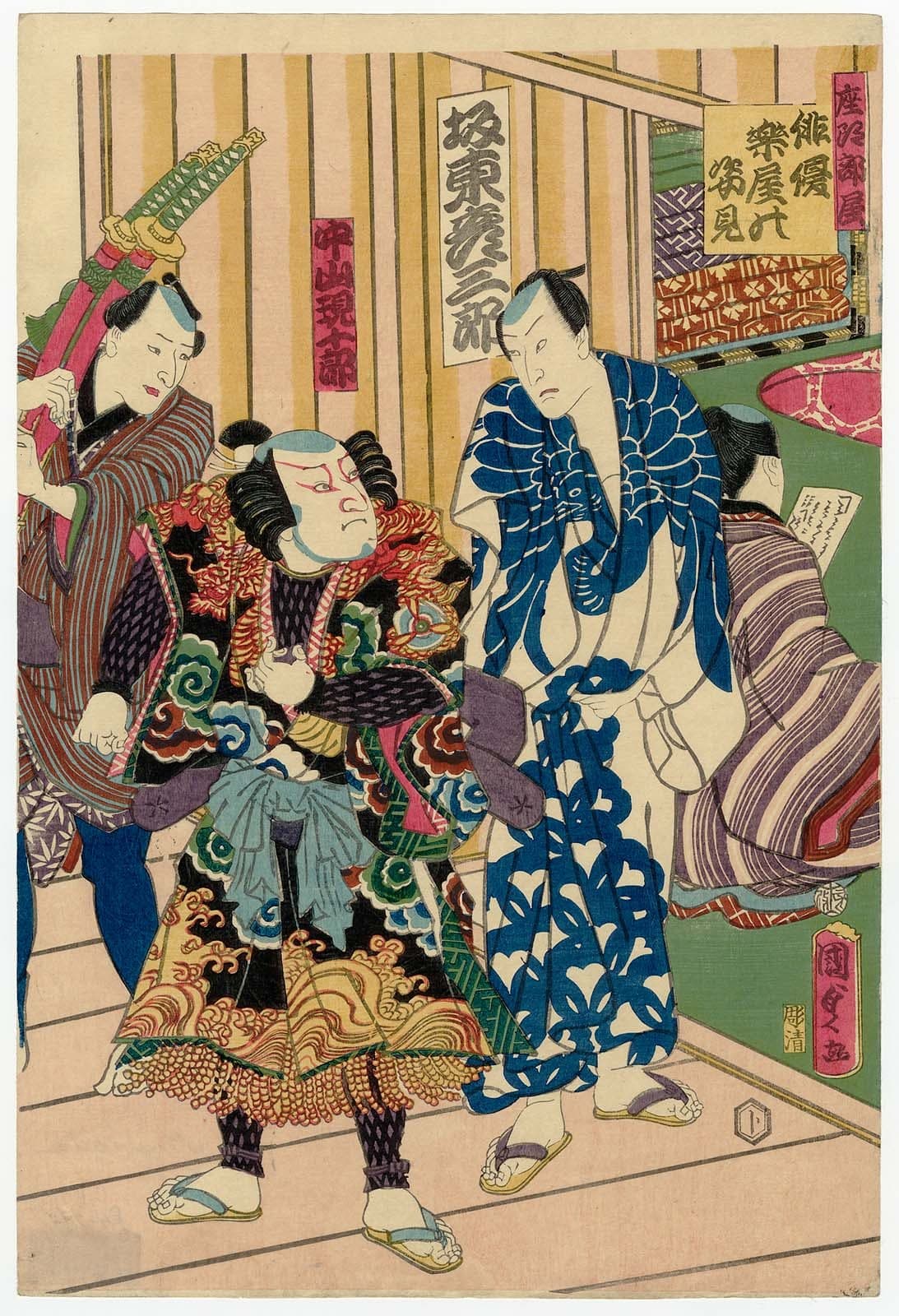
A face thickly coated in white looks as though it must burden the skin considerably. But kabuki makeup has protection built into it from the start, in the form of the bintsuke pomade base.
The white does not go on bare skin; a film of oil goes first, and this base is said to stand between pigment and skin. Removal, too, lifts with oil and wipes away, so no scrubbing stage is involved. Both in application and in removal, direct burden on the skin is held down. This is why it is said to be less punishing than it looks.
That said, the conditions are not easy. A kabuki actor is on stage for most days of a month's run. With two performances a day, he paints, sweats, removes and paints again — repeated day after day. There is also the strain on the scalp from wearing a wig. How each manages his skin is, in the end, largely left to his own devices.
Words Used Above
- The base layer
- The layer laid first beneath makeup — in kabuki, the bintsuke pomade.
Words in This Answer
More in This Category
Sources & Method
This answer rests on widely shared, established knowledge of kabuki. Matters transmitted as custom are marked "it is said," and assertion is avoided.
- Author
- KABUKI Universe Editorial Team
- Supervision
- Ichikawa Danjūrō
- Published
- Aug 25, 2026
- Updated
- Sep 9, 2026
Supervision means Ichikawa Danjūrō has reviewed this page's intent and key points. The text is the editorial team's writing, not Ichikawa Danjūrō's own statements. Editorial responsibility rests with the team, which corrects any error. Read the editorial policy