kōjō
口上
こうじょうthe formal on-stage address to the audience
INSTANT ANSWER
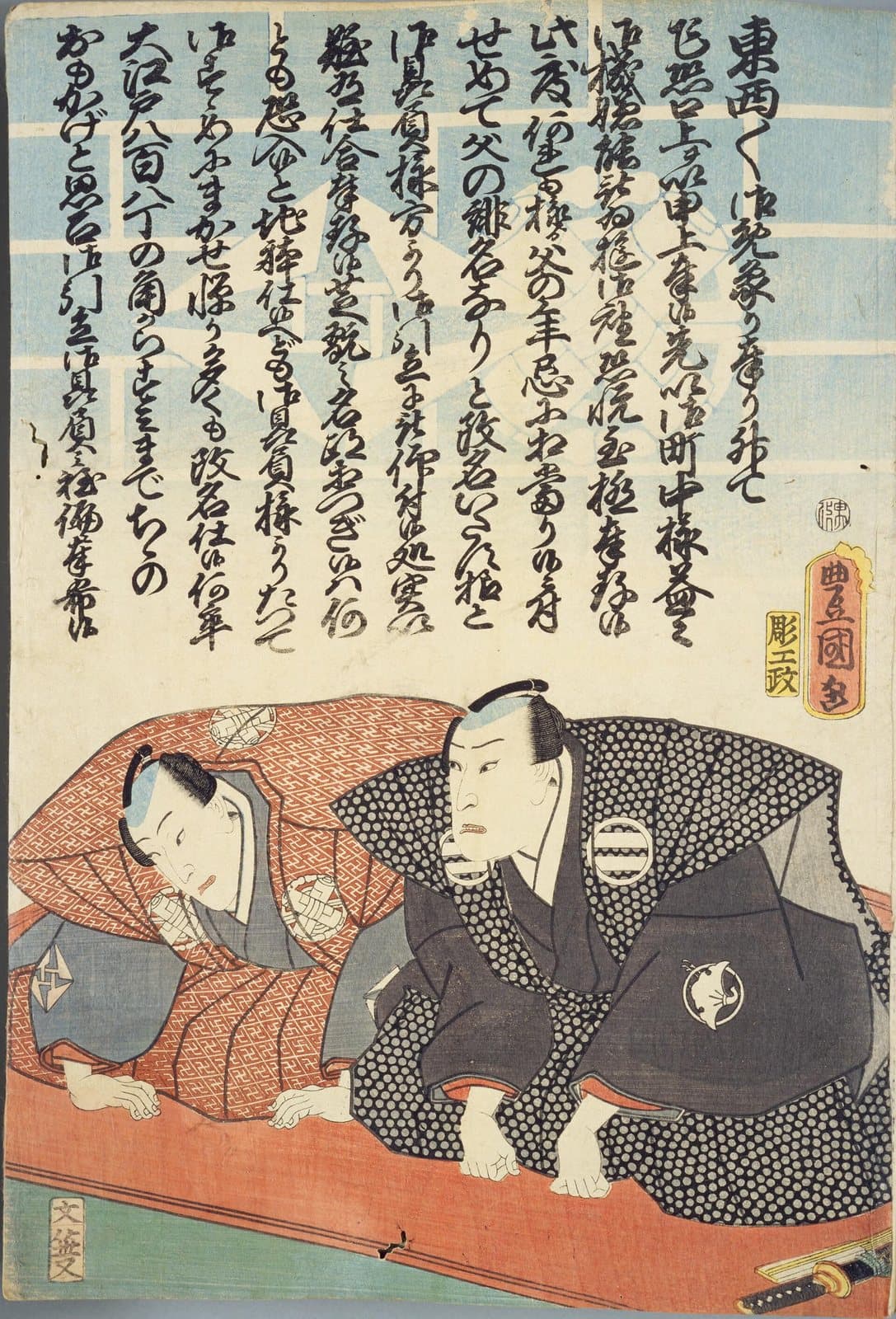
Kōjō is the formal address delivered from the stage to the audience—most famously the ceremonial scene in which actors in formal dress announce a name succession.
A kōjō is a formal address spoken from the stage to the audience. On special occasions such as name-succession or memorial productions it is staged as an independent act, with rows of actors in formal kamishimo dress and wigs—a ceremonial spectacle unique to kabuki.
The words express the joy of succession, reverence for predecessors, and resolve to carry the art into the future. Through the kōjō the audience witnesses—and joins in celebrating—the birth of a new name, the whole theatre becoming one festive space.
The word kōjō has traveled beyond the theatre. In sumo, the formal statement of resolve delivered by a wrestler promoted to yokozuna or ōzeki is called a kōjō, familiar from every news broadcast. And the kiri-kōjō—the closing address that once ended the day's performance—survives in daily Japanese as a word for stiff, ceremonious speech.
A kōjō was performed at the 2022 productions celebrating the succession of Ichikawa Danjūrō XIII Hakuen. At the Ichikawa Sōke's kōjō, the household's celebrated nirami glare is sometimes presented—traditionally said to ward off misfortune for all who see it.
Read this next
These words meet on the same stage. Knowing one makes the next easier to see.
- 襲名shūmeiShūmei is the succession to a historic stage name—not a mere renaming, but the acceptance of an artistic lineage, its history, and its responsibilities.Read
- 屋号yagōA yagō is the hereditary "house name" of a kabuki acting family—Naritaya for the Ichikawa Danjūrō line—often shouted from the audience in appreciation.Read
- 千穐楽senshūrakuSenshūraku is the closing day of a theatrical run; in kabuki it is traditionally written with a character that avoids the element for "fire."Read
Sources & Supervision
- Author
- KABUKI Universe Editorial Team
- Supervision
- Ichikawa Danjūrō
- Published
- Aug 15, 2026
- Updated
- Sep 9, 2026
Supervision means Ichikawa Danjūrō has reviewed this page's intent and key points. The text is the editorial team's writing, not Ichikawa Danjūrō's own statements. Editorial responsibility rests with the team, which corrects any error. Read the editorial policy