Q&A
Costume, Makeup & Wigs
Is it decided on the day whether to wear kumadori?
ANSWER
No. Whether and which kumadori is worn is fixed by the play and role. What may vary day to day is not the presence but the strength and weight of the lines.
The Short Version
- Whether and which kumadori is worn follows from the play and role; it is not a same-day choice.
- Suji-guma for the aragoto hero, indigo for the court villain: the face answers the role type.
- What is judged on the day is not whether but how the brush is handled.
- Strength and weight are adjusted to complexion, lighting and the size of the house.
See it in a picture
Beni-guma (red)
Justice, youth, overflowing strength
Ai-guma (indigo)
Villainy, vengeful spirits, cold power
Cha-guma (brown)
Demons and creatures beyond the human
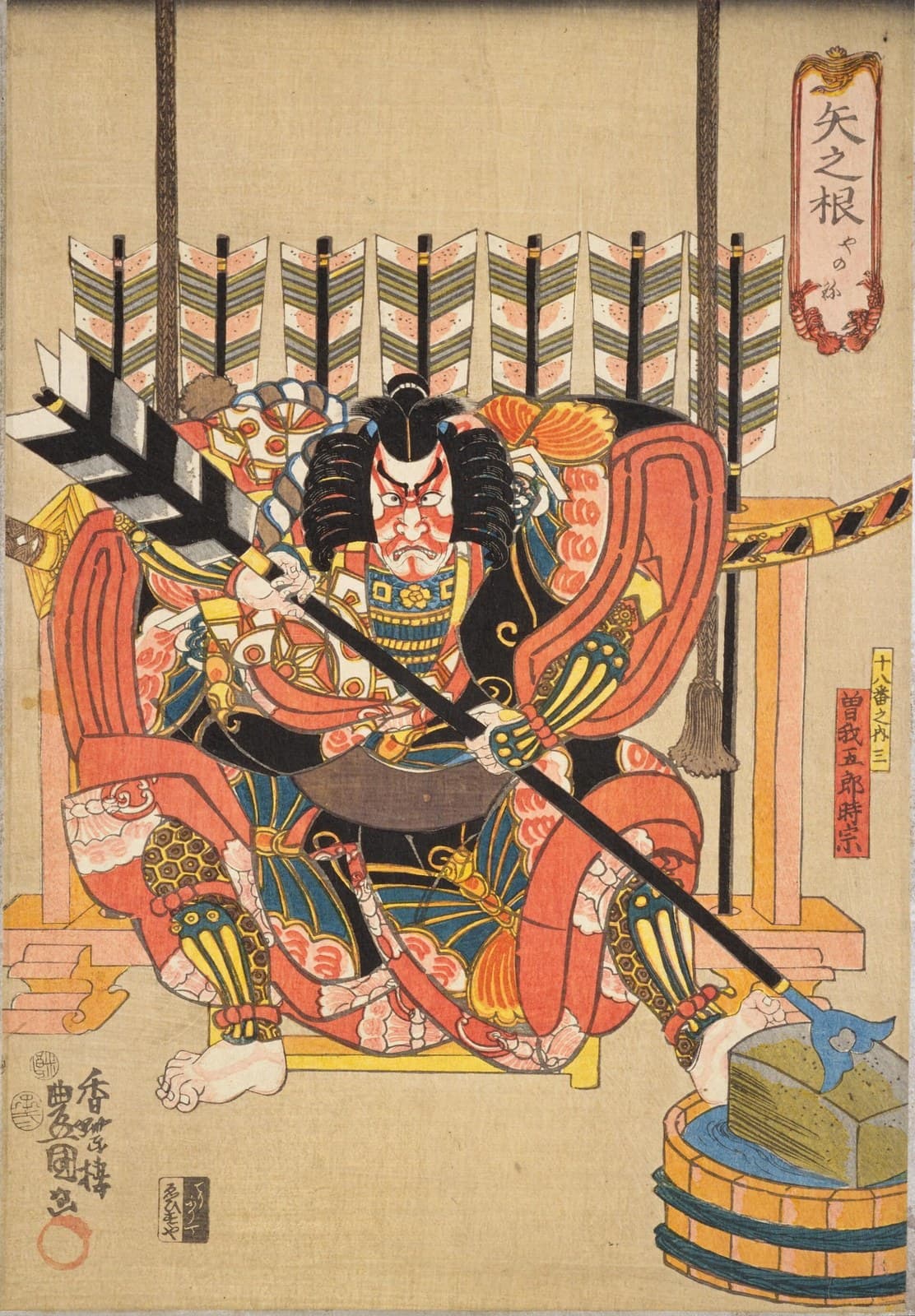
Kumadori is not added or dropped according to the day's mood, because it is part of the kata that makes a character's nature visible. Once the play and the role are fixed, which kuma is taken is all but fixed with them: red suji-guma for the aragoto hero, indigo for the court villain, brownish tones for demons and monsters — a system of correspondences. Change it arbitrarily and the audience misreads the figure.
What, then, does the actor judge each morning at the mirror? The handling of the brush. The same suji-guma reads differently against a different complexion; if tiredness shows, the lines may go in a little stronger. The size of the house matters: a large theatre requires strokes broad and heavy enough to carry to the far seats, while a small playhouse needs less. The lighting design too changes how the red comes across.
The design, in other words, is fixed; the implementation varies. What the kata draws does not move, but how it is drawn under the day's conditions is left to the actor. This is the sort of thing meant when people say kabuki's kata are not rigid. Play the same role for thirty days and there are thirty small differences. It looks the same, and not one day is quite the same as another.
Words Used Above
- Kata
- The fixed forms handed down. The design does not move; its execution has range.
Words in This Answer
- 隈取kumadoriKumadori is kabuki's distinctive makeup of bold colored lines that reveals a character's nature—red for heroic passion, blue for villainy or the supernatural.
- 隈取の色kumadori no iroThe colours of kumadori makeup tell you who a character is: red for heroic justice, indigo blue for villains and vengeful spirits, brown for demons and the supernatural.
- 荒事aragotoAragoto is the bold, larger-than-life acting style—said to have been created by Ichikawa Danjūrō I—in which heroes express superhuman power through striking makeup, oversized costumes, and dramatic poses.
More in This Category
Sources & Method
This answer rests on widely shared, established knowledge of kabuki. Matters transmitted as custom are marked "it is said," and assertion is avoided.
- Author
- KABUKI Universe Editorial Team
- Supervision
- Ichikawa Danjūrō
- Published
- Aug 25, 2026
- Updated
- Sep 9, 2026
Supervision means Ichikawa Danjūrō has reviewed this page's intent and key points. The text is the editorial team's writing, not Ichikawa Danjūrō's own statements. Editorial responsibility rests with the team, which corrects any error. Read the editorial policy