Q&A
Costume, Makeup & Wigs
What are the pigments of kumadori made from?
ANSWER
Historically, natural pigments such as safflower red and ink; today, mainly oil-based theatrical cosmetics blended for the stage.
The Short Version
- In the Edo period the red is said to have come from safflower.
- Together with indigo and ink, natural colourants sustained the makeup.
- Today, blended theatrical paints balancing colour and safety are used.
- The method is unchanged: drawn with brush and finger over a pomade base.
See it in a picture
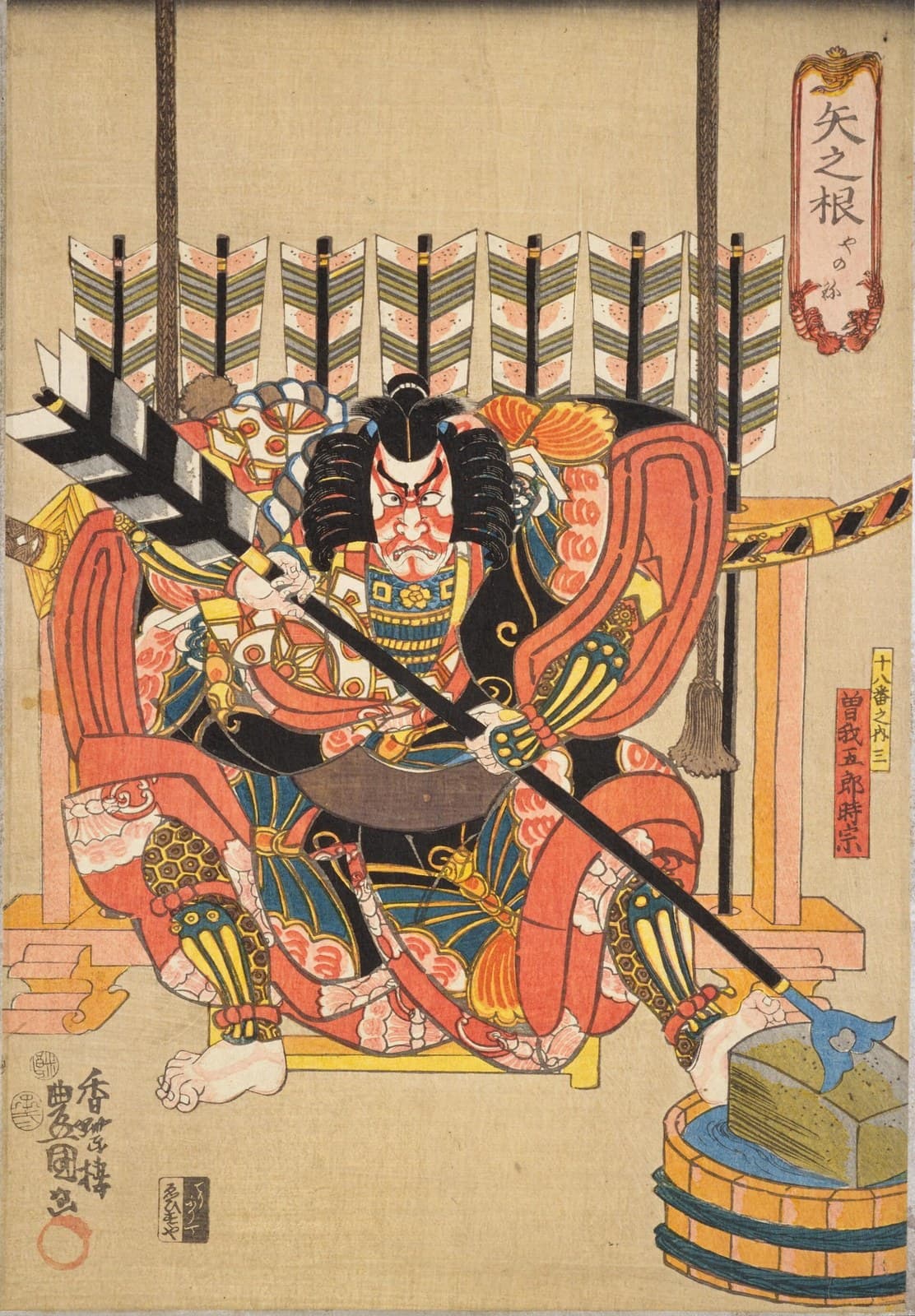
Beni-guma (red)
Justice, youth, overflowing strength
Ai-guma (indigo)
Villainy, vengeful spirits, cold power
Cha-guma (brown)
Demons and creatures beyond the human
The materials of kumadori have changed with the times. In the Edo period the red is said to have come from safflower — a plant used widely for both dyeing and cosmetics, so the material was continuous with everyday makeup of the day. Blue came from indigo, black from ink: all natural colourants.
Today the mainstay is blended theatrical paint. It must read as the intended colour under stage lighting, resist running under sweat, and be safe on skin, so purpose-made products are used. Natural materials as such do not answer modern lighting and performance conditions.
The materials have changed; the method has not. A pomade base is laid, lines are drawn over it with brush and finger, and the edges blurred — a sequence continuous from Edo. Nor has the oil-based nature changed, which is why, before removing the makeup, a face can be pressed to paper or cloth to take an impression of the kumadori. This is oshiguma, kept as a memento; with a water-based pigment it would not work at all. The nature of the material has shaped the custom.
Words Used Above
- Safflower
- The plant yielding red dye and cosmetic; the Edo-period red is said to derive from it.
- Paste cosmetics
- Cosmetics blended in paste form; the theatrical kind balances colour against safety.
Words in This Answer
- 隈取kumadoriKumadori is kabuki's distinctive makeup of bold colored lines that reveals a character's nature—red for heroic passion, blue for villainy or the supernatural.
- 押隈oshigumaAn oshiguma is a print made by pressing an actor's kumadori makeup onto silk or paper after a performance—a keepsake of that day's role.
- 隈取の色kumadori no iroThe colours of kumadori makeup tell you who a character is: red for heroic justice, indigo blue for villains and vengeful spirits, brown for demons and the supernatural.
More in This Category
Sources & Method
This answer rests on widely shared, established knowledge of kabuki. Matters transmitted as custom are marked "it is said," and assertion is avoided.
- Author
- KABUKI Universe Editorial Team
- Supervision
- Ichikawa Danjūrō
- Published
- Aug 25, 2026
- Updated
- Sep 9, 2026
Supervision means Ichikawa Danjūrō has reviewed this page's intent and key points. The text is the editorial team's writing, not Ichikawa Danjūrō's own statements. Editorial responsibility rests with the team, which corrects any error. Read the editorial policy