onnagata
女方
おんながたmale actors specializing in female roles
INSTANT ANSWER
An onnagata is a male actor who specializes in female roles, creating an idealized femininity through stylized movement, voice, and costume rather than realistic imitation.
Onnagata are male actors who specialize in female roles. The art developed after women were banned from the public stage in the early Edo period; rather than imitating women realistically, onnagata build an idealized femininity out of refined, stylized movement, voice, and costume.
Kabuki's world is complete when tachiyaku (male-role actors) and onnagata share the stage. Great onnagata roles—Agemaki in Sukeroku, Otomi in the story of Yosaburō—carry much of a play's allure.
For a close encounter with the onnagata art, the role of Princess Kumo no Taema in Narukami, one of the Kabuki Jūhachiban, is unforgettable. Sent to the priest Narukami, who has sealed away the rain-bringing dragon god, this beauty undoes his resolve with charm and wit—a drama carried essentially by two figures, its tension sustained by the onnagata's finely calibrated art.
Ayamegusa, the recorded teachings of the great Genroku-era onnagata Yoshizawa Ayame I, is said to set out twenty-nine precepts covering the onnagata's conduct on stage and in daily life. His famous dictum—that one cannot be a fine onnagata without living as a woman in everyday life—speaks to the depth of an art that is lived, not merely performed.
The onnagata art belongs to no single family but sustains kabuki as a whole. Even on the stages of the Ichikawa Sōke, whose house art is the male aragoto style, onnagata roles such as the courtesan Agemaki in Sukeroku carry much of the drama's splendor.
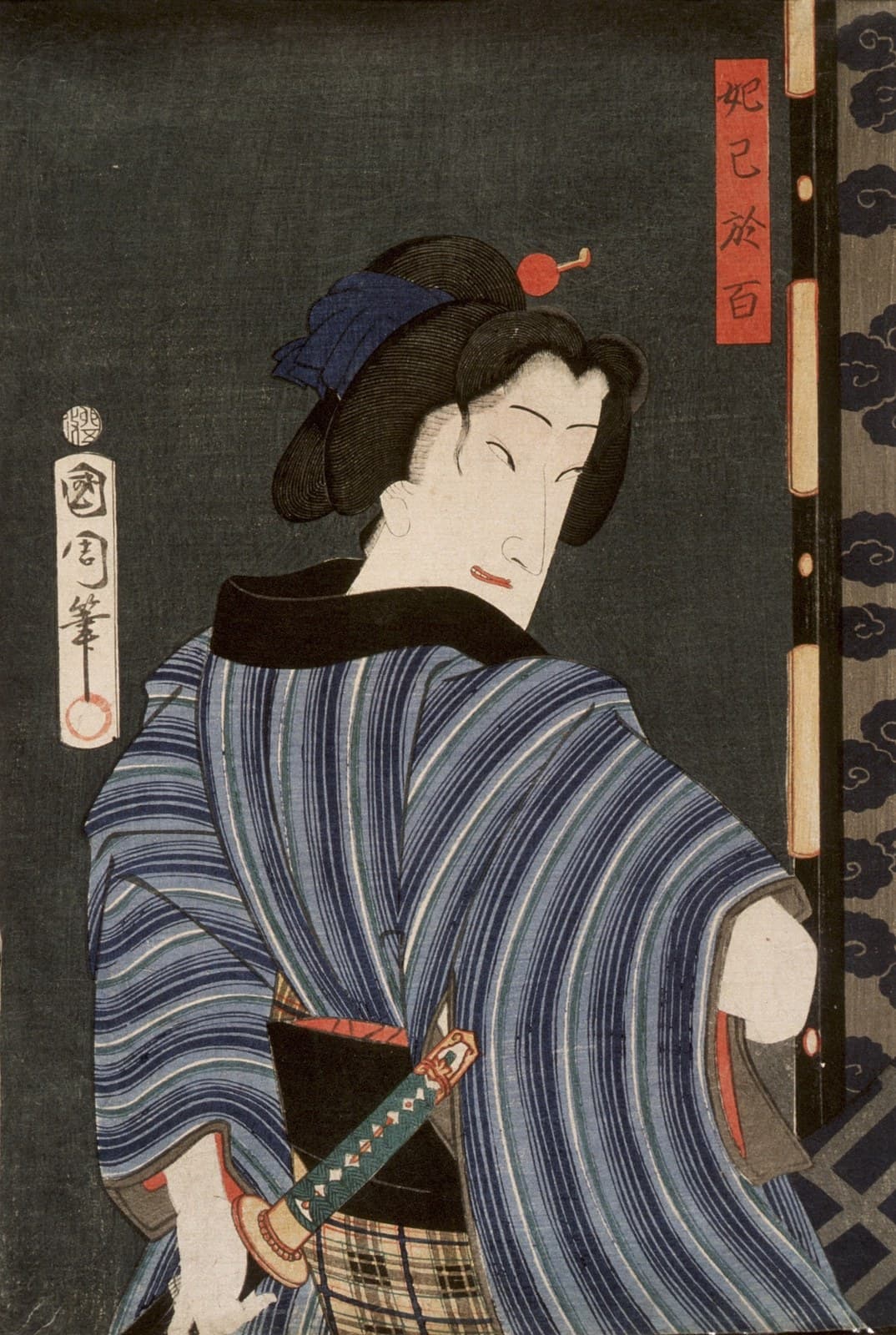
Plays Where You Can See It
- Sukeroku Yukari no Edo ZakuraSukeroku, Flower of Edo (Sukeroku Yukari no Edo Zakura)In the Yoshiwara pleasure quarter of Edo, the dashing street knight Sukeroku—lover of the great courtesan Agemaki—picks fights night after night.Kabuki JūhachibanView play
- NarukamiNarukami — The Thunder GodThe holy priest Narukami, wronged by the imperial court, has sealed the rain-bringing dragon god beneath a waterfall, plunging the land into drought.Kabuki JūhachibanView play
- Yowa Nasake Ukina no YokogushiScarred Yosaburō (Yowa Nasake Ukina no Yokogushi)Yosaburō, the pampered heir of a great Edo merchant house, meets the beautiful Otomi on the beach at Kisarazu and falls in love at first sight.View play
Read this next
These words meet on the same stage. Knowing one makes the next easier to see.
Sources & Supervision
- Author
- KABUKI Universe Editorial Team
- Supervision
- Ichikawa Danjūrō
- Published
- Aug 15, 2026
- Updated
- Sep 9, 2026
Supervision means Ichikawa Danjūrō has reviewed this page's intent and key points. The text is the editorial team's writing, not Ichikawa Danjūrō's own statements. Editorial responsibility rests with the team, which corrects any error. Read the editorial policy