Q&A
The Ichikawa Sōke
How is a name-succession decided?
ANSWER
It emerges from the family's and school's will, consultation with Shochiku, and the ripening of art and occasion. Once decided, celebratory productions are mounted and announced in the kōjō.
The Short Version
- No written rule governs it. Who inherits, and when, is settled slowly.
- The family head, the elders of the line, supporting senior actors and Shochiku must all come together.
- A predecessor's memorial year, the ripeness of the art, the calendar of production: succession moves when these clocks align.
- Once fixed, celebratory runs are mounted, and in the kōjō the new name is handed to the audience on stage.
See it in a picture
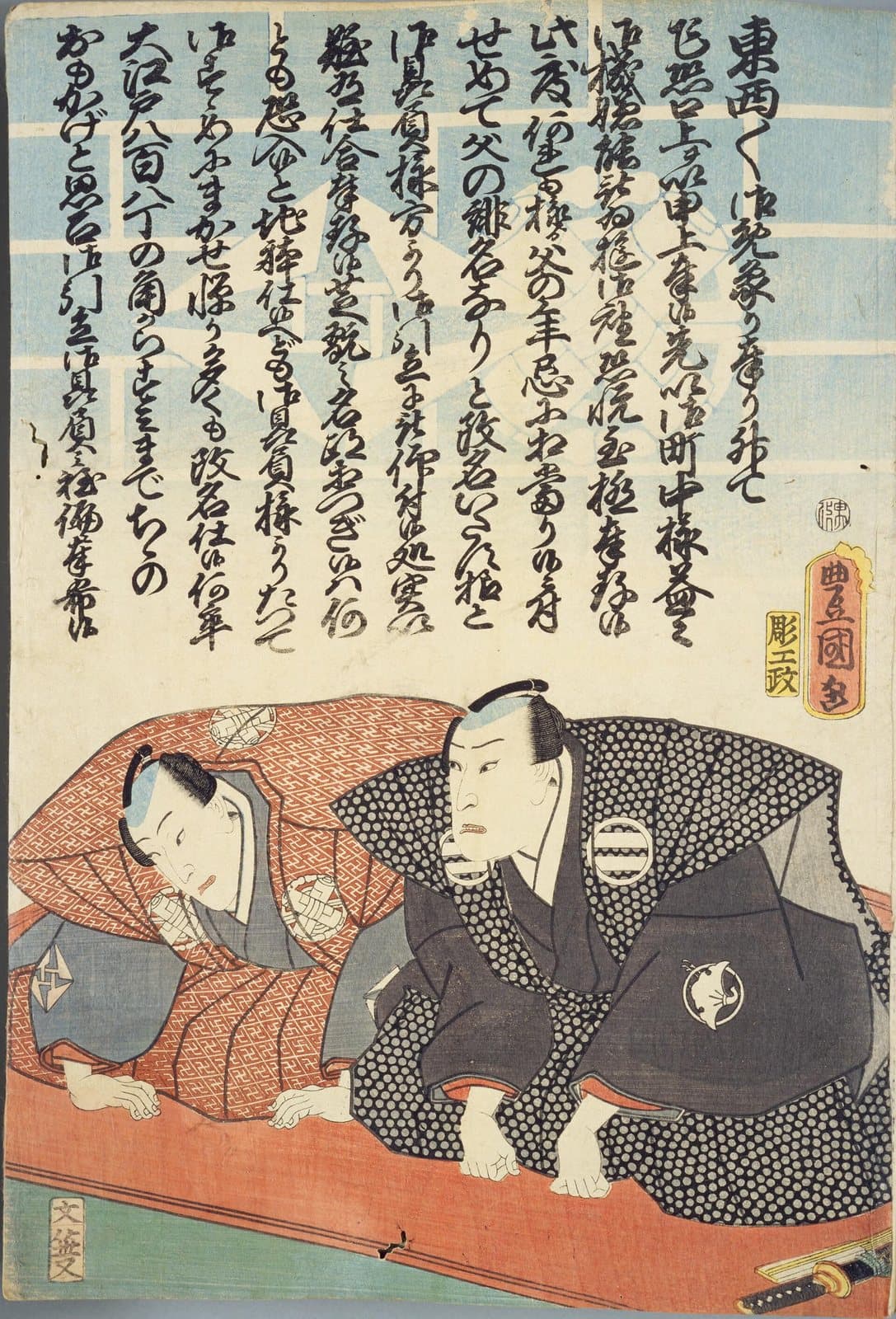
- the myōsekiA living name, inherited across generations.
- the moment ripensArt matured, a memorial year, the right production.
- consultationFamily, school and Shochiku settle it over time.
- the celebratory runCarrying the house's great roles — the de facto trial.
- the kōjōThe new name presented to the audience, on stage.
There is no codified rule for succession. No examination, no waiting list. Nor, however, does it appear out of nowhere. In practice it is arranged over a long stretch of time among a set of people: the head of the family, the elders of the line, the senior actors who stand behind the successor, and Shochiku, which mounts the productions.
What decides it is several conditions falling into place at once. A predecessor's memorial year — successions are often timed to such an anniversary. The ripeness of the successor's own art — whether he has reached the stage of carrying the roles the name demands. And the production calendar — whether a celebratory run can be mounted across several months. These run on separate clocks, and now and then a year comes when they coincide. That is when a succession begins to move.
Once fixed, it goes public. There is an announcement to the press, and then the celebratory runs are set. Month by month the productions continue at the Kabukiza and other theatres, sometimes extending into regional touring. And on stage there is the kōjō: actors in formal kamishimo seated in a row, the successor and the seniors who support him presenting the new name to the audience. The name is handed over not on paper but in front of the seats — and that moment is the heart of what a kabuki succession is.
Words Used Above
- Tsuizen
- A production held in memory of a deceased actor, commonly mounted on an anniversary year.
- The celebratory run
- The series of performances presenting a succession to the public, sometimes running for months.
- Kamishimo
- The stiff-shouldered formal dress of the Edo period, worn by the actors seated for a kōjō.
Words in This Answer
- 襲名shūmeiShūmei is the succession to a historic stage name—not a mere renaming, but the acceptance of an artistic lineage, its history, and its responsibilities.
- 名跡myōsekiA myōseki is a historic stage name handed down through generations—in kabuki, the name itself is a vessel of artistry and history.
- 口上kōjōKōjō is the formal address delivered from the stage to the audience—most famously the ceremonial scene in which actors in formal dress announce a name succession.
More in This Category
- Sukeroku and Kanjinchō are Naritaya house arts — why can other actors perform them?
- Are some kabuki names inherited and others newly created? Are there rules?
- If there is no male heir and no adoption, does a great name end? Is there no way to carry it on?
- What defines the Ichikawa Sōke's aragoto — and is the weight of the costume part of it?
Sources & Method
This answer rests on widely shared, established knowledge of kabuki. Matters transmitted as custom are marked "it is said," and assertion is avoided.
- Author
- KABUKI Universe Editorial Team
- Supervision
- Ichikawa Danjūrō
- Published
- Aug 25, 2026
- Updated
- Sep 9, 2026
Supervision means Ichikawa Danjūrō has reviewed this page's intent and key points. The text is the editorial team's writing, not Ichikawa Danjūrō's own statements. Editorial responsibility rests with the team, which corrects any error. Read the editorial policy