Q&A
Acting & Stage Expression
How do actors acquire kabuki's sense of ma — timing?
ANSWER
It cannot be handed over in writing. Ma is absorbed through childhood stage experience and the shared breathing of music, partners and audience — an individual art that is also the whole company's.
The Short Version
- Ma is not the gap between lines but the breathing of the whole theatre.
- Geza music, the tsuke, a partner's breath, the temperature of the house: all of it composes the ma.
- Actors soak in it from childhood on real stages, taking its pulse into the body through music and dance training.
- That no textbook exists for ma is itself proof that kabuki is a living art.
See it in a picture
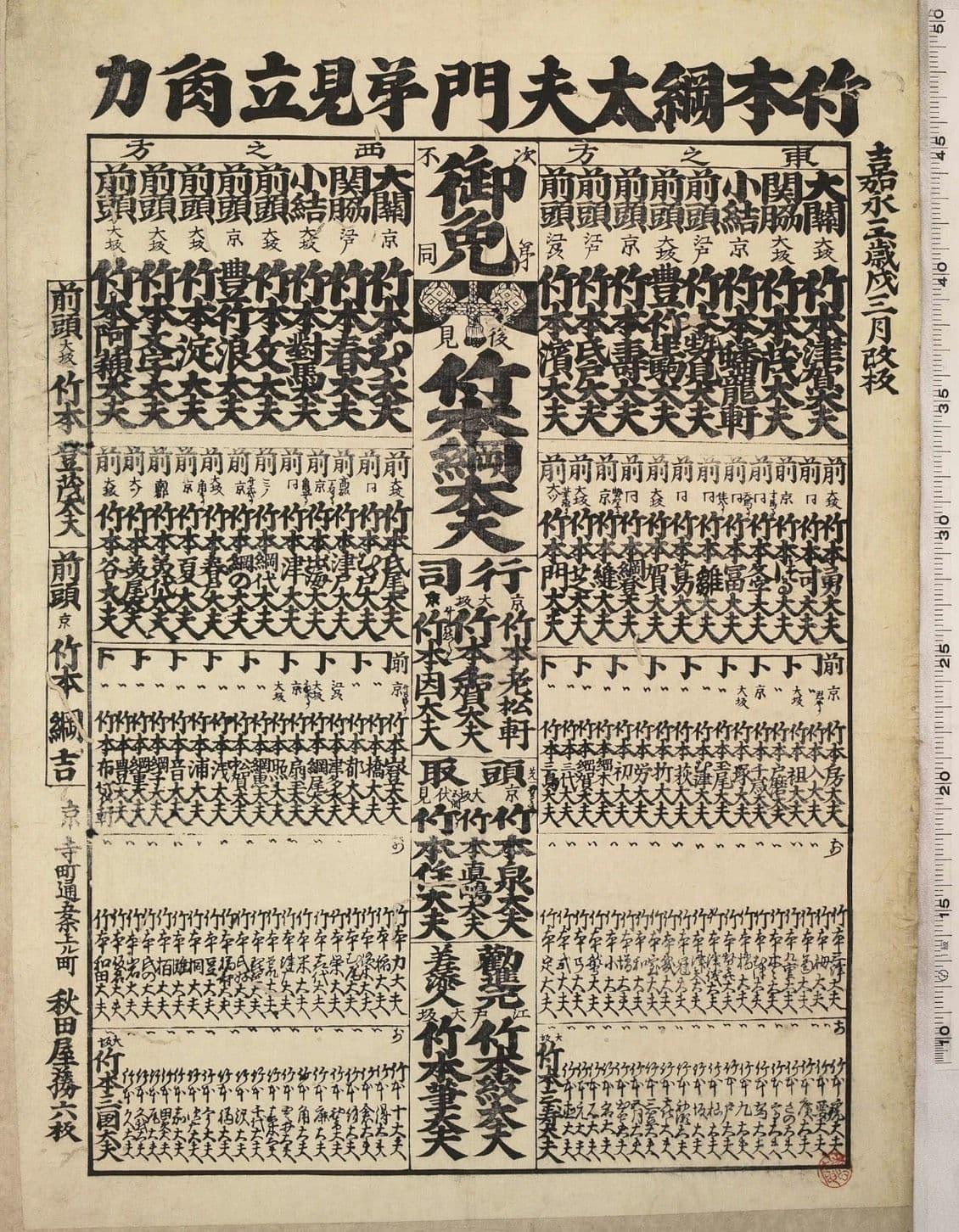
Ma is often explained as the blank between lines, but in kabuki it is wider than that. On stage it is the breathing of the whole theatre — the flow of the geza music, the strike of the tsuke, the breath of the actor opposite, and the temperature of the house. It is not, therefore, something acquired by rehearsing alone.
The centre of acquisition is the real stage. From childhood the actor stands in performance, placed inside the breathing the adults around him make. He may not yet understand it; his body learns the pulse regardless. Alongside this run studies in gidayū and nagauta and in classical dance. Training in the music oneself puts into the body a sense of where to draw breath, where to wait, where to come in.
In the end an actor finds his own ma through repeated failure and adjustment. Even in the same role, a different partner breathes differently. A different house changes how long one waits. There is, therefore, no correct ma — which is why no manual can be made. Had it been writable like a score, it would have been written; that it has not been is because it cannot be. That there is no textbook for ma is the plainest evidence that kabuki is not the replaying of a recording but an art raised, live, on the spot.
Words Used Above
- Ma
- Time placed between sounds and movements — not emptiness but something deliberately held.
- Breathing
- The shared sense of timing on stage, formed among actors, musicians and audience.
Words in This Answer
- ツケtsukeTsuke are the sharp beats of wooden clappers struck against a board at the side of the stage, accenting footsteps and landing exactly on the frozen mie poses.
- 黒御簾kuromisuThe kuromisu is the black-latticed room at the side of the kabuki stage where unseen musicians perform geza music live, in step with the drama.
- 竹本takemotoTakemoto is gidayū narrative music as performed in kabuki: a chanter and thick-necked shamisen carry the story in plays adapted from the puppet theatre.
More in This Category
Sources & Method
This answer rests on widely shared, established knowledge of kabuki. Matters transmitted as custom are marked "it is said," and assertion is avoided.
- Author
- KABUKI Universe Editorial Team
- Supervision
- Ichikawa Danjūrō
- Published
- Aug 25, 2026
- Updated
- Sep 9, 2026
Supervision means Ichikawa Danjūrō has reviewed this page's intent and key points. The text is the editorial team's writing, not Ichikawa Danjūrō's own statements. Editorial responsibility rests with the team, which corrects any error. Read the editorial policy