Q&A
Acting & Stage Expression
How is it decided whether an actor plays both male roles and onnagata, or mainly onnagata?
ANSWER
There is no formal assignment. It settles naturally from the house's artistic line, the actor's gifts and build, the judgment of masters, and his own inclination.
The Short Version
- No formal division exists; nobody is assigned to onnagata by decree.
- As children, actors take roles regardless of gender; a territory emerges as they grow.
- It forms where voice, build and movement meet the artistic line the house transmits.
- It is settled rather than decided — and a territory can widen over a lifetime.
See it in a picture
The Kabuki Jūhachiban
- 不破
- 鳴神
- 暫
- 不動
- 嫐
- 象引
- 勧進帳
- 助六
- 外郎売
- 押戻
- 矢の根
- 関羽
- 景清
- 七つ面
- 毛抜
- 解脱
- 蛇柳
- 鎌髭
played today as a matter of coursestaged only rarely
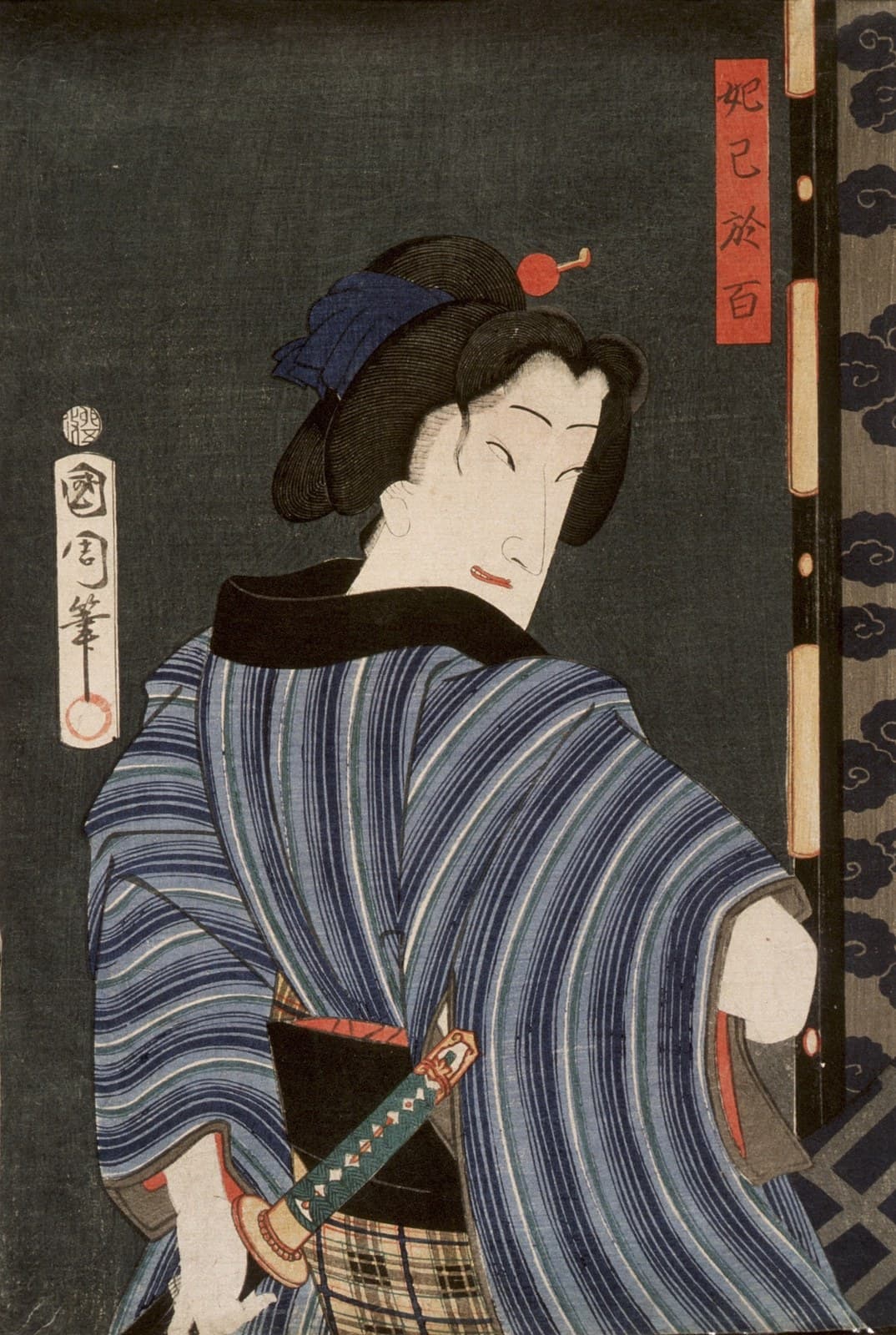
By way of background: the onnagata exists because, in a history where women did not appear on stage, the technique of men playing women's roles developed into an independent art. It is not a substitution but an idiom polished over four centuries, aiming at something other than a realistic portrait of a woman.
With that in place: no institution decides who becomes an onnagata. As a child, roles come regardless of gender. As the actor grows, several factors begin to converge. Voice — what it becomes after it breaks. Gara, the impression of build and frame. The quality of movement — what kind of motion looks naturally beautiful in this body. And the artistic line of the house: some families have specialised in onnagata, others habitually play both.
Where these converge, a territory becomes visible. So it is more accurate to say it settles than that it is decided. And crucially, the territory is not fixed. An actor who played many onnagata roles when young may shift with age toward the great male roles, or the reverse. Widening over a lifetime is not unusual: as the body changes and the art deepens, the roles that can be carried change with them.
Words Used Above
- Gara
- The impression a body's size and frame make on stage — a term for measuring fit with a role.
- Yakugara (role types)
- The types of role — male lead, onnagata, villain — within which an actor holds his territory.
Words in This Answer
- 女方onnagataAn onnagata is a male actor who specializes in female roles, creating an idealized femininity through stylized movement, voice, and costume rather than realistic imitation.
- 立役tachiyakuTachiyaku are the male roles of kabuki—and the actors who specialize in them—forming the counterpart to the onnagata female-role specialists.
- お家芸oiegeiOiegei is the art a family has excelled at and handed down for generations—in kabuki, most famously the Ichikawa Sōke's aragoto style.
More in This Category
- Are there stages of roles — parts for the young, parts that wait for experience?
- Why is the hanamichi on the left side, facing the stage?
- What is the difference when an actor looks to kamite or to shimote?
- What does it mean when, after a climactic pose, the actor opens his right hand to the right and left to the left?
Sources & Method
This answer rests on widely shared, established knowledge of kabuki. Matters transmitted as custom are marked "it is said," and assertion is avoided.
- Author
- KABUKI Universe Editorial Team
- Supervision
- Ichikawa Danjūrō
- Published
- Aug 25, 2026
- Updated
- Sep 9, 2026
Supervision means Ichikawa Danjūrō has reviewed this page's intent and key points. The text is the editorial team's writing, not Ichikawa Danjūrō's own statements. Editorial responsibility rests with the team, which corrects any error. Read the editorial policy