Q&A
Plays, Culture & History
Are there kabuki plays that take up the society of the past thirty years?
ANSWER
Plays about current events themselves are few, but new kabuki drawn from contemporary novels, manga and anime flourishes — the sensibility of the present is actively absorbed.
The Short Version
- Edo kabuki was a theatre of the present, staging real incidents within a short span.
- Relieved of that journalistic function, today's kabuki rarely dramatises current affairs directly.
- In its place, new kabuki works drawn from contemporary novels, manga and anime keep appearing.
- This is the present-day form of the kabuku spirit, unafraid of the outrageous — and a doorway for first-time audiences.
See it in a picture
Edo through roughly Meiji
the classics
Travels with its accumulated kata; the text is tended by hotei at each staging.
from late Meiji
shin-kabuki
Written as dramatic literature; begins from a fixed text.
postwar onward
new works
Often drawn from contemporary novels, manga and anime.
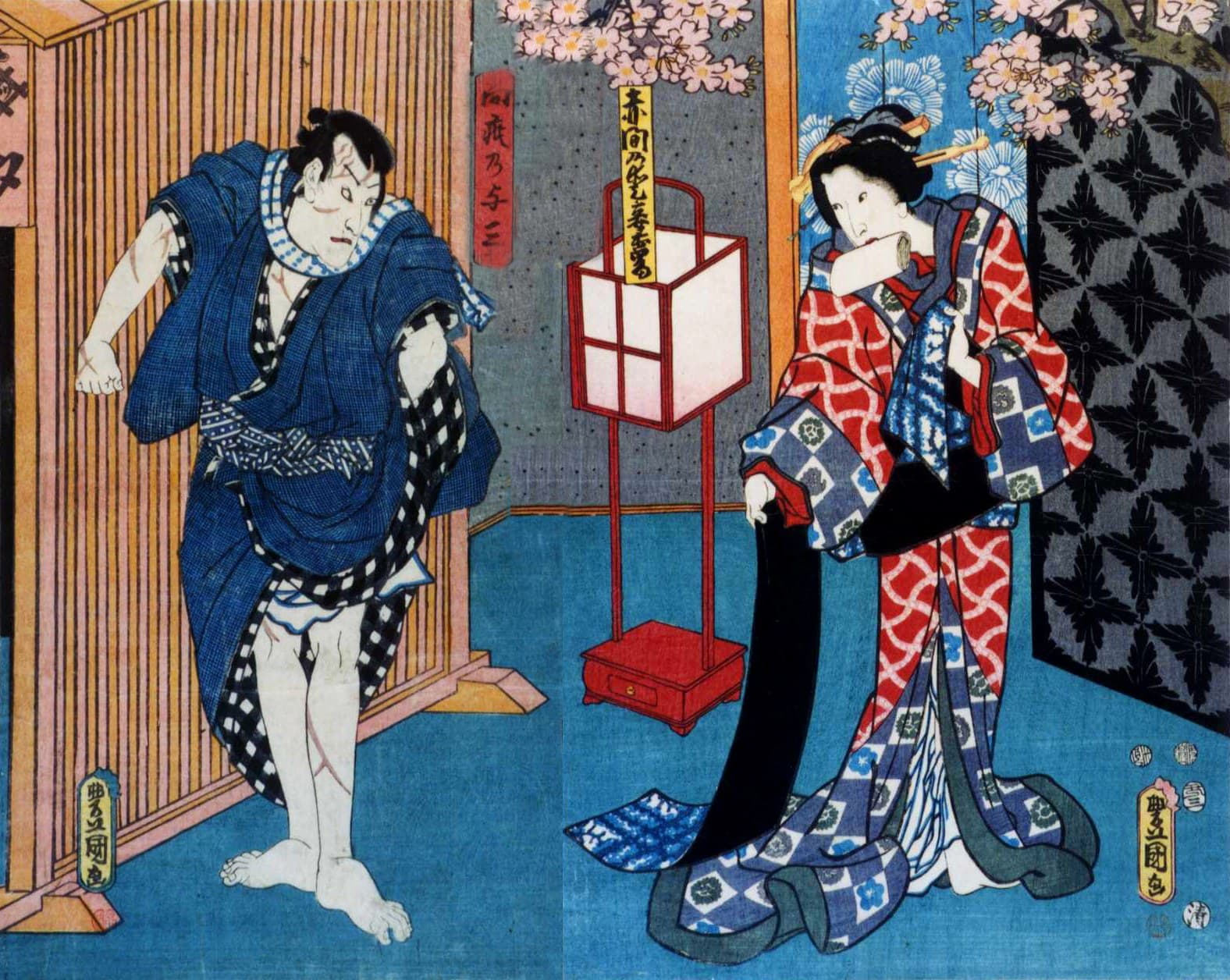
Answering this requires looking at what Edo kabuki was. It was, to a striking degree, a theatre of now. A love-suicide or a vendetta that had gripped the city reached the stage within a short span. Because the shogunate restricted the naming of real people, the setting was shifted into the past and names altered — but audiences watched knowing perfectly well which incident was meant. It was something like news, gossip programme and theatre fused into one.
Today that function has passed elsewhere. The media report; other forums debate social questions. As a result, few plays dramatise the events of recent decades directly. But this does not mean kabuki has become detached from the present. Only the mode of absorption has changed.
The main channel now is new kabuki drawn from contemporary sources. Stagings taken from manga, anime and modern fiction are mounted one after another, carrying younger audiences into the theatre. Some see this as a departure from tradition — but the word kabuki comes from kabuku, to tilt: to depart from the ordinary, to be strange. To be unafraid of the outrageous and greedy for new conceits has been kabuki's character since it began. The material changes; the disposition does not.
Words Used Above
- Kabuku
- An old word meaning to tilt away from the ordinary, to behave strangely — the root of "kabuki."
- New kabuki works
- Kabuki written in the present day; recent years have seen many drawn from contemporary sources.
Words in This Answer
- 新歌舞伎shin-kabukiShin-kabuki ("new kabuki") names the plays written for the kabuki stage by independent literary authors from late Meiji to early Shōwa, joining modern drama to kabuki technique.
- 傾くkabukuKabuku means to "lean" away from convention and live boldly in one's own colours—the word from which kabuki itself is said to derive.
- 生世話物kizewamonoKizewamono are the most sharply realistic of kabuki's domestic plays, depicting the raw life and lower depths of the Edo townsman's world.
More in This Category
Sources & Method
This answer rests on widely shared, established knowledge of kabuki. Matters transmitted as custom are marked "it is said," and assertion is avoided.
- Author
- KABUKI Universe Editorial Team
- Supervision
- Ichikawa Danjūrō
- Published
- Aug 25, 2026
- Updated
- Sep 9, 2026
Supervision means Ichikawa Danjūrō has reviewed this page's intent and key points. The text is the editorial team's writing, not Ichikawa Danjūrō's own statements. Editorial responsibility rests with the team, which corrects any error. Read the editorial policy