Q&A
The Ichikawa Sōke
Are there conditions, required arts, or examinations for succeeding to a name like Danjūrō?
ANSWER
No written examination exists. Lineage, mastery of the house arts and the consent of school and producers are the de facto conditions — and the celebratory run itself is the greatest trial.
The Short Version
- There is no licence and no examination; no codified standard of assessment exists.
- The de facto conditions are lineage of art, the power to carry the house roles, and the consent of the line and the producers.
- Carrying the house's great roles — Sukeroku, Benkei in Kanjinchō — through the celebratory run is the assessment, held before the audience.
- Changing the name takes a day; building an art worthy of it is held to take a lifetime.
See it in a picture
- the myōsekiA living name, inherited across generations.
- the moment ripensArt matured, a memorial year, the right production.
- consultationFamily, school and Shochiku settle it over time.
- the celebratory runCarrying the house's great roles — the de facto trial.
- the kōjōThe new name presented to the audience, on stage.
To answer directly: there is no licence and no examination. No clause anywhere states what one must be able to do in order to bear the name Danjūrō. That does not mean there are no conditions. They are simply unwritten — and there are several of them, laid one over another.
One is lineage of art: whether the successor has in fact inherited what the name has carried. For Ichikawa Danjūrō that means aragoto, and the Kabuki Jūhachiban. Another is consent: the family head, the elders of the line, the senior actors standing behind him, and Shochiku, which mounts the productions — unless these judge together that the time has come, nothing moves. And last there is the ripeness of the art itself: whether he has reached the stage of carrying the roles the name demands.
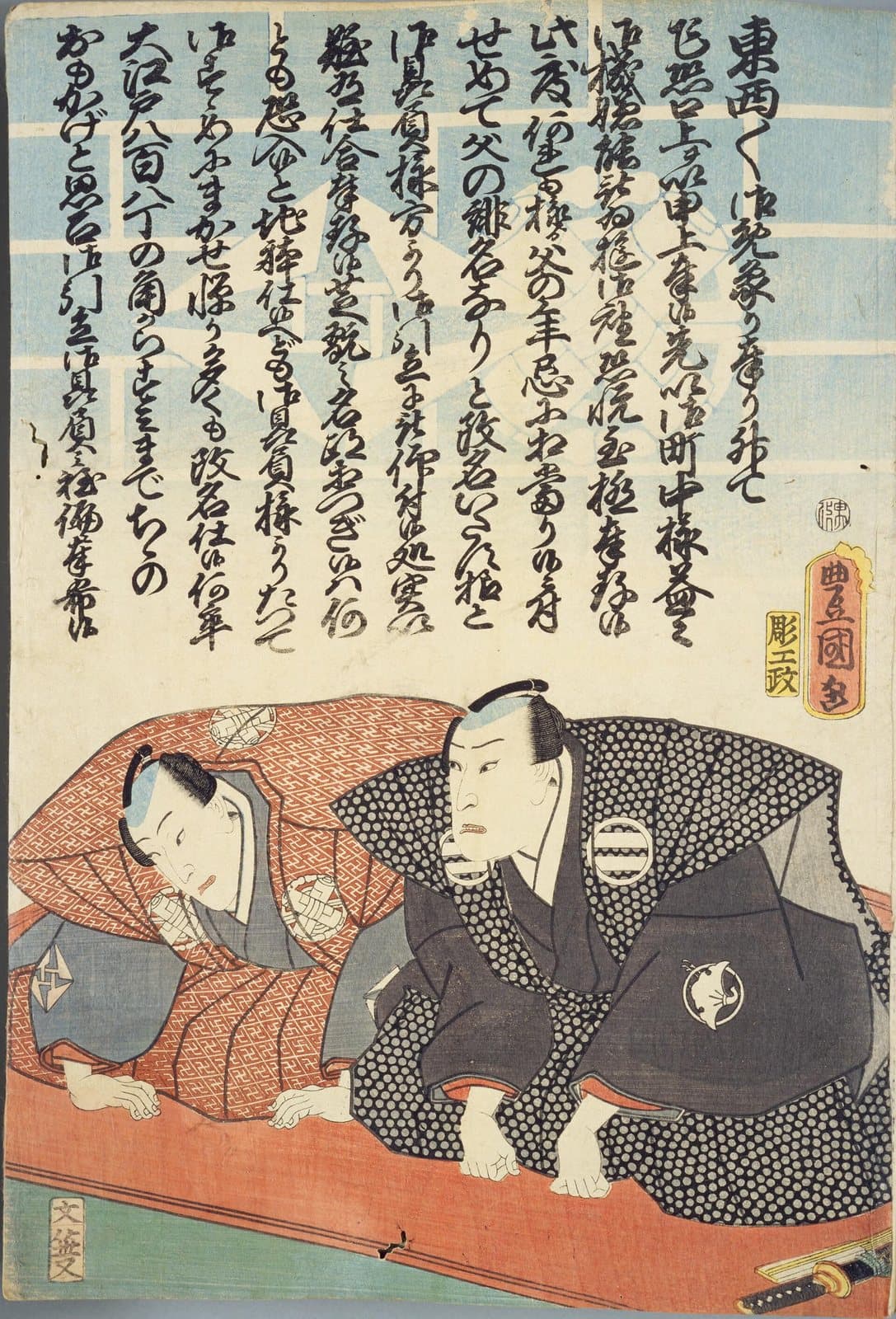
And then the greatest trial comes after the succession. The celebratory run sets the house's great roles — Sukeroku, Benkei in Kanjinchō — and the successor carries them across months while the audience and the whole theatre world watch. It is not a review of documents but an open examination conducted on stage. The name Ichikawa Danjūrō carries a history of more than three hundred and fifty years since the first holder, and that weight does not lift on the day it is taken. Which is why it is said that changing the name takes a day, and building an art worthy of it takes a lifetime.
Words Used Above
- A great role
- A weighty role representing a house's art. A succession turns on whether the successor can carry one.
- The theatre world
- The whole body of people around kabuki — actors, producers, critics.
Words in This Answer
- 襲名shūmeiShūmei is the succession to a historic stage name—not a mere renaming, but the acceptance of an artistic lineage, its history, and its responsibilities.
- 名跡myōsekiA myōseki is a historic stage name handed down through generations—in kabuki, the name itself is a vessel of artistry and history.
- 十八番jūhachiban / ohakoThe Jūhachiban are the eighteen plays chosen by the Ichikawa Sōke as its signature repertoire—the origin of the everyday word ohako, meaning "one's speciality."
- 口上kōjōKōjō is the formal address delivered from the stage to the audience—most famously the ceremonial scene in which actors in formal dress announce a name succession.
- Sukeroku, Flower of Edo (Sukeroku Yukari no Edo Zakura)Sukeroku Yukari no Edo ZakuraIn the Yoshiwara pleasure quarter of Edo, the dashing street knight Sukeroku—lover of the great courtesan Agemaki—picks fights night after night.
- Kanjinchō — The Subscription ScrollKanjinchōMinamoto no Yoshitsune, estranged from his powerful brother, flees north disguised as a mountain ascetic with his loyal retainer Benkei and a handful of men.
More in This Category
Sources & Method
This answer rests on widely shared, established knowledge of kabuki. Matters transmitted as custom are marked "it is said," and assertion is avoided.
- Author
- KABUKI Universe Editorial Team
- Supervision
- Ichikawa Danjūrō
- Published
- Aug 25, 2026
- Updated
- Sep 9, 2026
Supervision means Ichikawa Danjūrō has reviewed this page's intent and key points. The text is the editorial team's writing, not Ichikawa Danjūrō's own statements. Editorial responsibility rests with the team, which corrects any error. Read the editorial policy