From Meiji to Shōwa
The Tenth
Ichikawa Danjūrō X
Holding the house through the years without a Danjūrō
Conferred posthumously — not taken in life
- Life
- 1882–1956-02-01
- Bore the name Danjūrō
- —
- Earlier and literary names
- Horikoshi Fukusaburō (his real name, also used as his stage name) · Ichikawa Sanshō V (taken in November 1917)
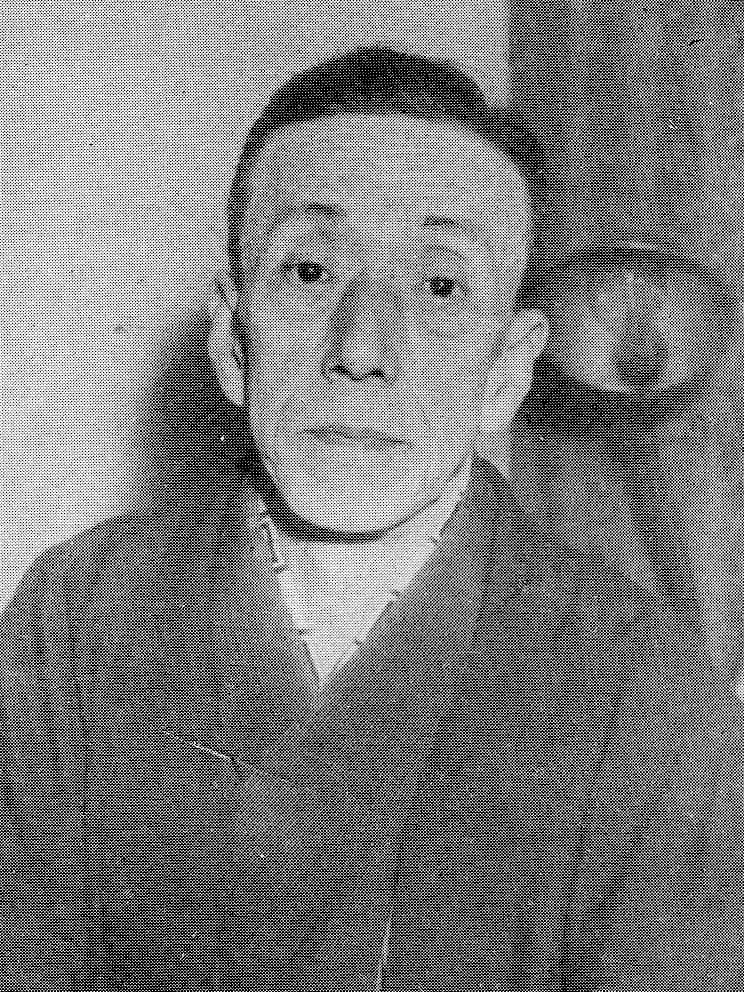
This generation in thirty seconds
Born the second son of a wealthy Nihonbashi merchant, he graduated from Keiō Gijuku and married Jitsuko, the eldest daughter of Danjūrō IX. In 1910, after his father-in-law's death, he resolved to become an actor, and in 1917 took the name Ichikawa Sanshō V. Through the years when there was no Danjūrō he guarded the head house and brought buried plays of the Kabuki Jūhachiban back to the stage. He never bore the name Danjūrō in life; it was conferred on him after his death.
What he inherited
As the son-in-law of Danjūrō IX
The Naritaya official site records that after graduating from Keiō Gijuku he became the son-in-law of Jitsuko, eldest daughter of Danjūrō IX. The site's Danjūrō Encyclopaedia relates that Jitsuko took the name Suisen II and her younger sister Fukiko the name Kyokubai, and that neither had a male heir.
The position of head of the Ichikawa house
The Naritaya official site states that he held throughout a will and sense of duty to protect the authority of the Ichikawa head house, and performed the offices the head house owed during an unprecedented interval with no Danjūrō.
The inheritance of the Kabuki Jūhachiban
Of the eighteen plays whose selection Danjūrō VII announced in 1832, many were by then no longer staged. The Naritaya official site singles out his successive revivals of these as the achievement most worth recording.
What he created, changed or revived
Reviving the buried plays of the Jūhachiban
The Naritaya official site writes that his successive revivals of buried Jūhachiban plays — Gedatsu, Fuwa, Zōhiki, Oshimodoshi, Uwanari, Nanatsumen and Jayanagi among them — are probably the achievement most deserving of note.
From a merchant family to the stage
The Naritaya official site records that he was born the second son of Inanobu Rihei, a wealthy Nihonbashi merchant, and that in 1910, after the death of Danjūrō IX, he suddenly resolved to become an actor. He sought out the Kamigata actor Nakamura Ganjirō I on tour, quietly appeared in bit parts, and in October of that year was formally presented at the Osaka Nakaza under his own name, Horikoshi Fukusaburō, at twenty-nine.
In November 1917, the Naritaya official site records, he performed the Jūhachiban play Yanone at the Kabukiza and took the name Ichikawa Sanshō V, at thirty-six. Mimasu — the three nested measures — is also the name of the Ichikawa house crest.
Living with the limits of his craft
The Naritaya official site is candid: because he entered an actor's training as an amateur past middle age, his technique was in the end wanting, and for all his effort he was not well regarded as a performer. He nonetheless continued to discharge the duties of the head house.
Signature roles and plays
Kabukiza, November 1917 — the performance at which he took the name Ichikawa Sanshō V. The Naritaya official site lists Yanone among the eighteen plays of the Jūhachiban.
The Jūhachiban plays he brought back
The Naritaya official site names Gedatsu, Fuwa, Zōhiki, Oshimodoshi, Uwanari, Nanatsumen and Jayanagi — plays that at the time were scarcely staged at all.
The bit parts of his first appearances
In 1910, the Naritaya official site records, he sought out Nakamura Ganjirō I on tour and quietly took the stage in minor roles; his formal presentation followed at the Osaka Nakaza that October.
Kabuki in his age
After the death of Danjūrō IX the name vanished from the stage for more than half a century. Those years, as the Japan Arts Council describes them, saw the flourishing of shin-kabuki written by outside literary figures such as Tsubouchi Shōyō, alongside a generation of great actors — Nakamura Utaemon V, Onoe Kikugorō VI, Nakamura Kichiemon I — that earned the period the name of Tokyo kabuki's golden age. Then the Second World War burned down most of the theatres, and under the occupation plays such as Kanadehon Chūshingura were for a time banned. Recovery began with the rebuilding of the Kabukiza in 1951. All of this he saw through as head of the house.
Meanwhile, in the world
- 1910–1935Art & plays
The vogue for shin-kabuki, and revivals
The Japan Arts Council records that from the late Meiji era into early Shōwa, plays written by authors outside kabuki came to be staged, and that Ichikawa Sadanji II performed them energetically. Sadanji also revived pieces long unperformed, among them the Jūhachiban play Narukami.
- 1910–1940Art & plays
The golden age of Tokyo kabuki
The Japan Arts Council records that a company of outstanding actors — Nakamura Utaemon V, Onoe Baikō VI, Matsumoto Kōshirō VII, Ichimura Uzaemon XV, Onoe Kikugorō VI, Nakamura Kichiemon I — gave the period the name of Tokyo kabuki's golden age, while in Kamigata, Nakamura Ganjirō I was called the face of Osaka.
- 1945Society
Theatres burned, and plays banned under occupation
The Japan Arts Council records that the Second World War burned down almost all of kabuki's theatres and took many of its people. When performance finally resumed under the occupation, many plays — Kanadehon Chūshingura among them — were for a time banned as endorsing militarism and the old status order.
- 1951Society
The Kabukiza rebuilt
The Japan Arts Council records that the Kabukiza was rebuilt in 1951 and that, helped by the wide response to a staging of Genji Monogatari, kabuki began to recover. He died five years later.
Where the age and the actor meet
- 1910Art & plays
To the stage by way of Nakamura Ganjirō I
The Naritaya official site records that in 1910, after the death of Danjūrō IX, he suddenly resolved to act and sought out the Kamigata actor Nakamura Ganjirō I on tour. The Japan Arts Council describes Ganjirō in those same years as the actor who perfected a modern wagoto and was called the face of Osaka.
- 1917–1956Art & plays
Filling the gap as head of the house
The Naritaya official site records that through an unprecedented interval with no Danjūrō he performed the offices the head house owed, and revived one buried Jūhachiban play after another — years in which the absence of the name was answered by the staging of the family art.
- 1956Art & plays
The name of the tenth, conferred after death
The Naritaya official site records that he died on 1 February 1956 at seventy-three, and that on the day of the funeral his successor Ebizō — later Danjūrō XI — conferred the name of Danjūrō X upon the deceased. The site's Danjūrō Encyclopaedia phrases it as being given the name posthumously. This was not a succession taken in life.
From this generation to the next
The Naritaya official site says plainly that he was not well regarded as an actor. Yet through more than fifty years without a Danjūrō he guarded the authority of the head house and returned buried Jūhachiban plays to the stage. That accumulation became the ground on which his adopted son, the eleventh, could take up the name.
What remains today
Gedatsu, Fuwa, Zōhiki, Oshimodoshi, Uwanari, Nanatsumen and Jayanagi passed through his revivals on the way to the Jūhachiban as it is performed now.
A name handed on by posthumous conferral
A case in which the name was not taken in life but conferred after death — something that must be kept distinct from an ordinary succession.
The continuity of the Ichikawa head house
Even in the years when the name Danjūrō was absent from the stage, the duties of the head house went on.