Q&A
Acting & Stage Expression
Do the ōmukō calls of house names like "Naritaya!" reach the actors on stage?
ANSWER
By all accounts, yes. A well-timed call is woven into the play's ma — a form of co-performance that lifts the actor and belongs to kabuki itself.
The Short Version
- They do reach the stage — clearly enough to be built into the play's timing.
- Calls land at the pressure points of the play's breathing: the locking of a mie, an entrance.
- A good call in the right place is said to tighten the whole scene.
- Calling the yagō is a dialogue between actor and audience cultivated over three centuries.
See it in a picture
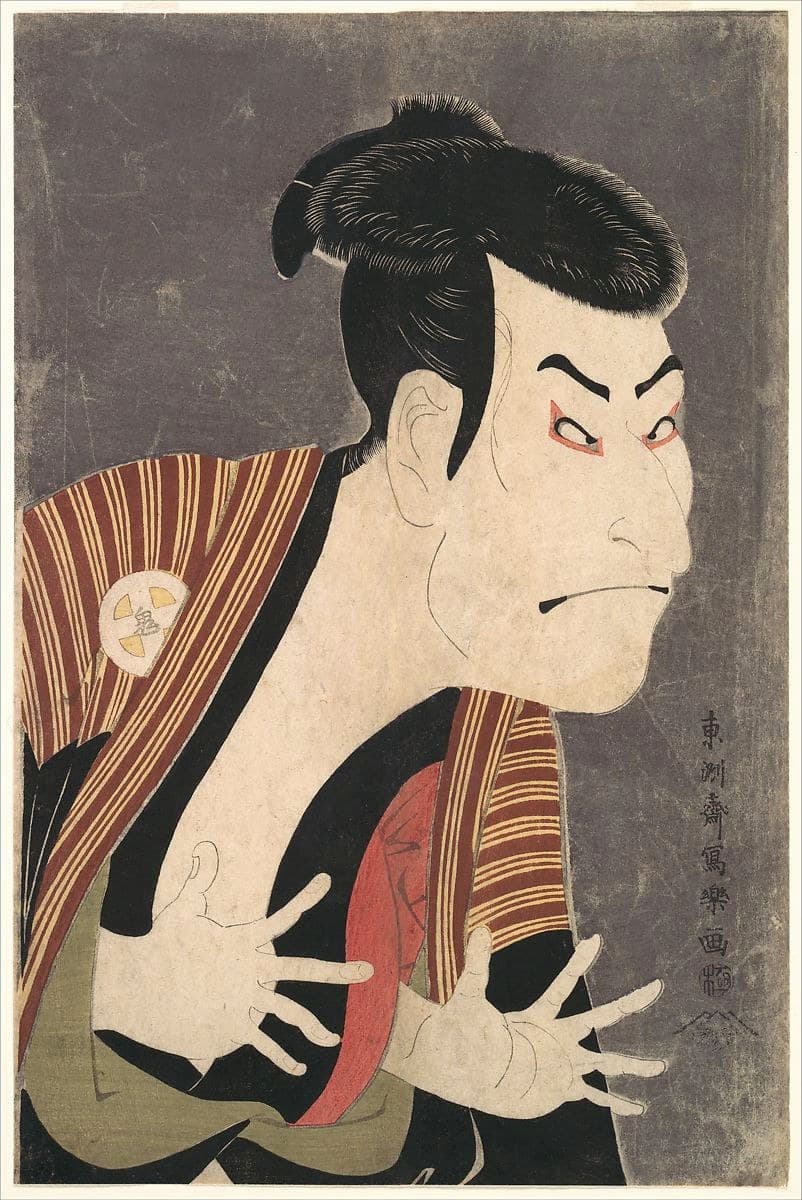
First, a premise: the ōmukō calls not an actor's personal name but his yagō, the house name — "Naritaya" for the Ichikawa main line, "Otowaya" for the Onoe Kikugorō house. Calling the house rather than the person says a good deal about the character of this art. What is being acclaimed is not only one actor's skill but the family art handed down through generations.
With that in place, the answer is yes — and in a stronger sense than merely being audible. Calls land at the pressure points of the play's breathing: the locking of a mie, an entrance along the hanamichi, a withdrawal. The actor receives the cry inside the ma and moves into what follows. The call is not encouragement flying in from outside the play; it is built into the play's own time.
A good call, therefore, tightens a scene. One short well-pitched cry at exactly the right point raises the density of the instant; a call that misses the timing lets the scene go slack. That this is difficult is precisely why the calling societies have trained at it. Three centuries of cultivation between actors and audience have shaped this form of dialogue in the theatre, and a cry of "Naritaya!" sounds on top of all of it.
Words Used Above
- Yagō (the house name)
- The name attached to an actor's house — Naritaya for the Ichikawa main line, Otowaya for the Onoe Kikugorō house.
- Ōmukō
- The seats at the very back of the theatre — and the calls that come from them.
Words in This Answer
- 大向うōmukōŌmukō are the well-timed shouts of an actor's house name—"Naritaya!"—from the back of the theatre, and the aficionados who make them.
- 屋号yagōA yagō is the hereditary "house name" of a kabuki acting family—Naritaya for the Ichikawa Danjūrō line—often shouted from the audience in appreciation.
- 見得mieA mie is the stylized pose in which an actor freezes at a moment of peak emotion, punctuated by the sharp crack of wooden clappers.
- 花道hanamichiThe hanamichi is a raised runway through the audience that turns an actor's entrances and exits into dramatic highlights of their own.
More in This Category
Sources & Method
- Author
- KABUKI Universe Editorial Team
- Supervision
- Ichikawa Danjūrō
- Published
- Aug 25, 2026
- Updated
- Sep 9, 2026
Supervision means Ichikawa Danjūrō has reviewed this page's intent and key points. The text is the editorial team's writing, not Ichikawa Danjūrō's own statements. Editorial responsibility rests with the team, which corrects any error. Read the editorial policy