Q&A
Going to the Theatre
How can I prepare for a play before going?
ANSWER
A few minutes with the synopsis is enough. On the day, the earphone guide and printed programme will help. This site's play guides and glossary are built exactly for this.
The Short Version
- Three lines will do: who is who, and what is at stake. More is not needed.
- On the day the earphone guide gives live commentary, and the programme can be read at the interval.
- To go deeper, learn the story-world behind a play — the Soga world, the Yoshitsune world — and plays start linking up.
See it in a picture
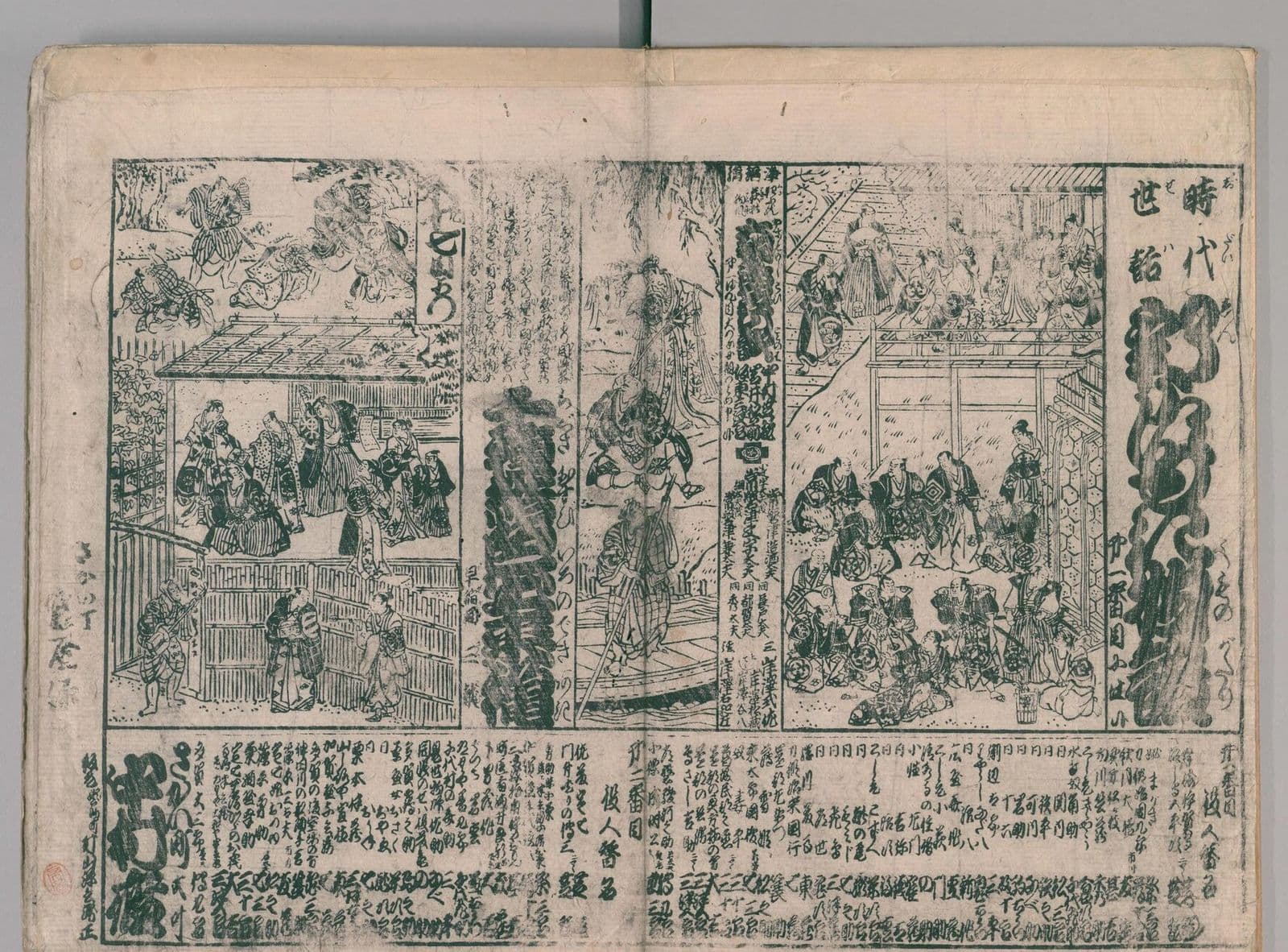
Preparation does not need hours; too much of it turns the visit into checking answers. Three lines are enough: who is who, what is at stake, and where the high point falls. With that in place, the stage's own idiom does the rest. Kabuki is made on that assumption.
On the day there are two aids. One is the earphone guide, a small receiver that delivers commentary timed to the scene — who a character is, what a movement means — and is well worth renting on a first visit. The other is the sujigaki, the programme sold in the theatre, carrying the cast, the synopsis and commentary. Read at the interval, it visibly sharpens the act that follows.
For anyone wanting to go further, learn the idea of a sekai — a story-world. Many kabuki plays are built on bodies of narrative already known to their audiences: the Soga world of the brothers' vendetta, the Yoshitsune world, and others. Learn one and plays that looked unrelated begin to lie on the same map, and the pleasure of recognition sets in — so that is where he turns up. Preparation for one visit becomes the doorway to the next. This site's play guides and glossary are built with exactly that use in mind.
Words Used Above
- Sekai (a story-world)
- The known body of narrative a play is built upon — the Soga world, the Yoshitsune world and others.
- Sujigaki
- The programme sold at the theatre, with cast, synopsis and commentary — and a keepsake afterwards.
Words in This Answer
- イヤホンガイドiyahon gaidoThe Earphone Guide is an in-theatre audio service that explains the story, stage conventions, and music of kabuki in real time as the play unfolds.
- 曽我物soga-monoSoga-mono are plays based on the Soga brothers' vendetta—a story so beloved that Edo theatres staged a Soga play every New Year.
- 番付・筋書banzuke / sujigakiBanzuke are kabuki's traditional playbills; their descendants are today's theatre programs, called sujigaki in Tokyo.
More in This Category
Sources & Method
This answer rests on widely shared, established knowledge of kabuki. Matters transmitted as custom are marked "it is said," and assertion is avoided.
- Author
- KABUKI Universe Editorial Team
- Supervision
- Ichikawa Danjūrō
- Published
- Aug 25, 2026
- Updated
- Sep 9, 2026
Supervision means Ichikawa Danjūrō has reviewed this page's intent and key points. The text is the editorial team's writing, not Ichikawa Danjūrō's own statements. Editorial responsibility rests with the team, which corrects any error. Read the editorial policy