Q&A
Going to the Theatre
How can I come to love kabuki more?
ANSWER
Find your hiiki — one actor to follow. Through them, plays, house arts and history link up of themselves, and the theatre turns into a place you belong.
The Short Version
- Since Edo, the heart of kabuki fandom has been attaching to an actor rather than a play. This is hiiki.
- Follow one and interest spreads of itself: his house's art, his father's and grandfather's stages, other houses' kata.
- See one play in different casts, keep the programmes, use single-act seats to raise your count. All can start today.
See it in a picture
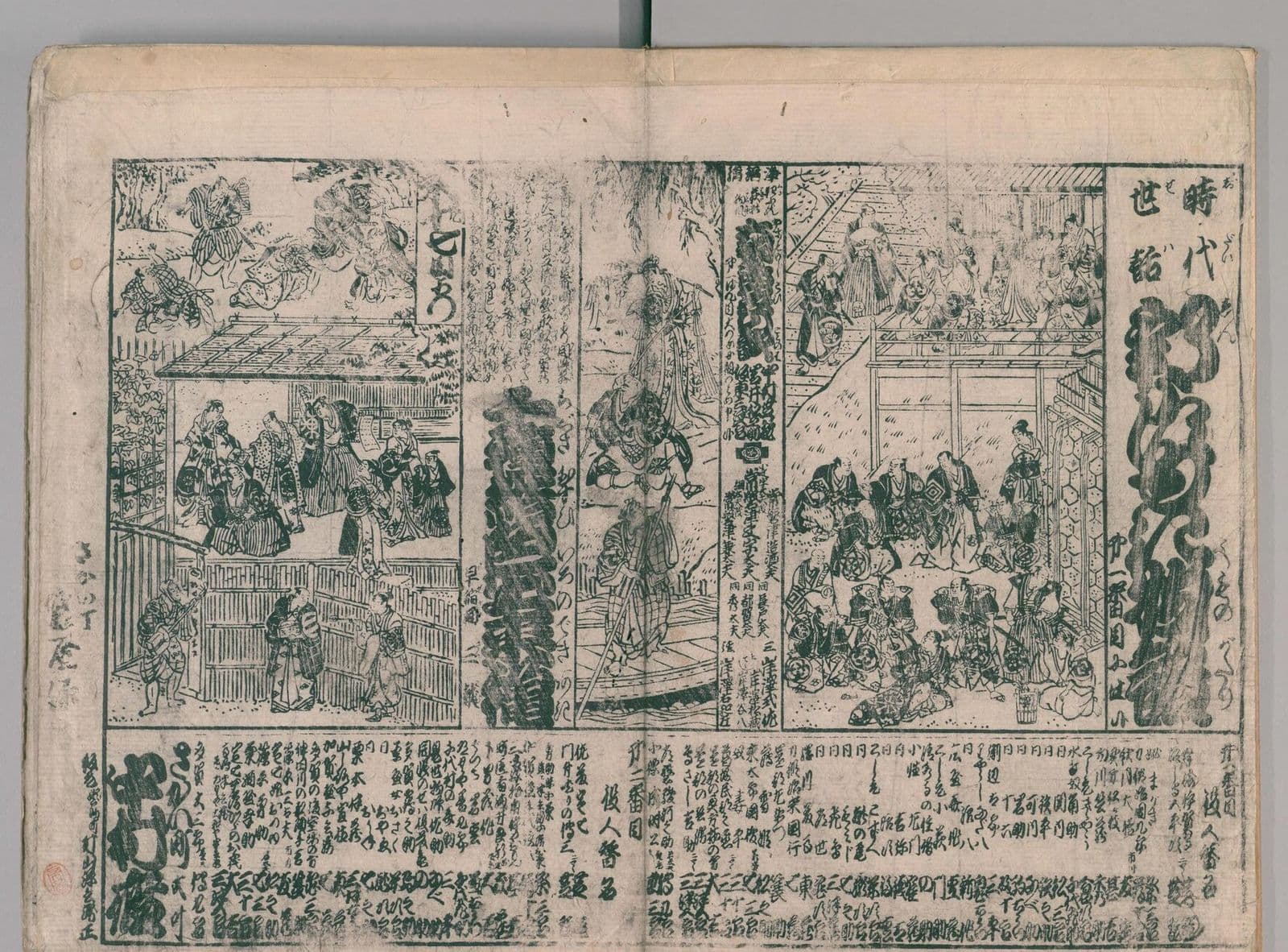
The Kabuki Jūhachiban
- 不破
- 鳴神
- 暫
- 不動
- 嫐
- 象引
- 勧進帳
- 助六
- 外郎売
- 押戻
- 矢の根
- 関羽
- 景清
- 七つ面
- 毛抜
- 解脱
- 蛇柳
- 鎌髭
played today as a matter of coursestaged only rarely
The shortest road to loving kabuki runs, in truth, through people rather than plays. Since Edo, audiences have gone to the theatre less for what is on than for who is on. Actor prints were produced in such quantity because so many people wanted the image of their hiiki — their favourite — close at hand. That way of enjoying it works exactly as well today.
Once you begin following one actor, the interest widens by itself. First you want to know the roles he excels in. Then his house's art — which plays this family has carried down. You go back through his father's and grandfather's stages, and want to compare how another house plays the same role. Before long the repertory, the history and the genealogies have all come in together. Nothing was learned as study, so little of it slips away.
A few things you can start today. See the same play in different casts. Keep the programmes you buy instead of discarding them, and build a record of your own viewing. Use the single-act seats to raise your count without ceremony. Follow the actors' own posts and videos. None of it requires elaborate preparation. And once you have even one hiiki, the theatre stops being somewhere you occasionally go and becomes somewhere you attend. That is when it becomes most interesting.
Words Used Above
- Hiiki
- The actor one supports — since Edo, the first doorway through which audiences enter kabuki deeply.
- A viewing record
- A record of what you saw and when — which accumulates on its own if you keep the programmes.
Words in This Answer
- お家芸oiegeiOiegei is the art a family has excelled at and handed down for generations—in kabuki, most famously the Ichikawa Sōke's aragoto style.
- 一幕見席hitomakumi-seki / makumiThe single-act gallery on the fourth floor of the Kabukiza lets you watch just one act at a modest price—kabuki's most casual point of entry.
- 番付・筋書banzuke / sujigakiBanzuke are kabuki's traditional playbills; their descendants are today's theatre programs, called sujigaki in Tokyo.
More in This Category
Sources & Method
This answer rests on widely shared, established knowledge of kabuki. Matters transmitted as custom are marked "it is said," and assertion is avoided.
- Author
- KABUKI Universe Editorial Team
- Supervision
- Ichikawa Danjūrō
- Published
- Aug 25, 2026
- Updated
- Sep 9, 2026
Supervision means Ichikawa Danjūrō has reviewed this page's intent and key points. The text is the editorial team's writing, not Ichikawa Danjūrō's own statements. Editorial responsibility rests with the team, which corrects any error. Read the editorial policy